Turn digitalization dreams into a plan for success with defined ROI


Emerson’s Operational Certainty consulting business targets an estimated annual $1 trillion loss in operational performance by helping manufacturers integrate Industrial Internet of Things (IIoT) technologies and updated organizational work practices to achieve Top Quartile performance.
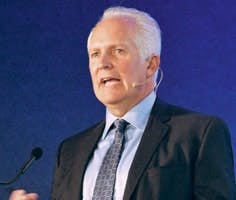
“My group helps users leverage new technology to enable workers to be more productive. We stay with the customer to drive change, implement technologies, achieve goals and drive them into top quartile performance.” Emerson’s Tom Waun leads the company’s new Operational Certainty consulting practice.
“Operational losses are the result of production downtime, increased safety incidents, as well as excessive energy consumption, emissions and production costs,” said Tom Waun, general manager, Operational Certainty Consulting, Emerson Automation Solutions, at the 2017 Emerson Global Users Exchange. “We have quantified the opportunity in each industry, and it’s Emerson’s mission to help customers target these losses with scalable plans to recover what some call ‘dead money’ in their plants.”
In a recent Emerson and Industry Week survey of manufacturing executives, 60% acknowledged having active IIoT pilot projects underway, yet only 5% had clear business case justification. Asked about the challenges for operational efficiency programs, 47% indicated company culture, 41% cite a lack of clear business strategy, and 34% point to lack of clarity on which technology will deliver measurable improvements.
“We see a potential to increase earnings before interest, tax or depreciation (EBITDA) by 15%,” said Waun. Of that, 7-10% is through reliability: data and work management and practices; 3-5% is by improving production feed-to-product ratio and decision support; and 3-5% is by improving energy efficiency and emissions. “We also expect to improve health, safety, security and environmental performance by mitigating personnel exposure and improving real-time operational awareness,” Waun added.
“Virtually all manufacturers are focused on some form of digital enhancement, but very few have a plan to drive the culture change necessary to capitalize on the opportunity that digital transformation represents,” said Waun. “Automation is the highest-impact lever to both accelerate and sustain behavior change and deliver results.”
Emerson’s new Operational Certainty consulting practice includes more than 100 consultants with deep expertise in disciplines including reliability, safety, energy and emissions, production, and IIoT infrastructures. They are supported by more than 5,000 project and applications engineers to help manufacturers execute plans and achieve digital transformation. Together, they combine strategies, processes, tools and expertise to simplify and accelerate institutionalization of operational best practices.
“My group helps users leverage new technology to enable workers to be more productive,” Waun said. “We stay with the customer to drive change, implement technologies, achieve goals and drive them into top quartile performance.”
Operational Certainty consulting methodology
Driving operational certainty starts with an analysis of IT and network infrastructure, with an eye to facilitating the communications that allow the collaboration that leads to digital transformation. “We jump-start their progress on the journey to digitization,” said Moazzam Shamsi, director, global solutions architects, Emerson Automation Solutions. “We look at where they are today, how their architecture is serving its functions and individuals, and figure out where it needs to be to fulfill their vision of digitization and IIoT.”
Most manufacturers are in one of three situations. “Some know what they want, but not how to get there,” Shamsi said. “Some have no idea where to start. The third group has made smart decisions about outfitting their plant with great technology, but no vision where to go with it.”
Often, data is siloed. Work practices are inflexible because of limited connectivity, so the existing architecture is underutilized. “They may have great capability, but inflexible, outdated reference models,” Shamsi said. “The environment is no longer static. They need to be multiskilled and agile, and we need to be sure their architecture and data flows support that. We close the gaps and show them new ways.”
For example, a floating liquified natural gas facility wanted more asset visibility. “They added WiFi and WirelessHART so information does not all have to go through the DCS, and is visible to everyone who needs it,” Shamsi said.
A major paper, film and ink supplier wanted to improve maintenance. “They added central work order processing and improved their maintenance strategy with centralized scheduling,” Shamsi said. “They now have a grip on total hours and maintenance technician efficiency.”
About the Author
Paul Studebaker
Paul Studebaker
 Leaders Logo
Leaders relevant to this article: