Extral installs Nitrex’s nitriding system
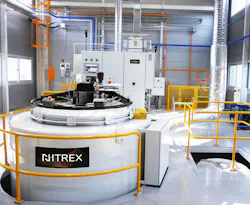
To better serve the construction, automobile and machinery industries, aluminum extrusion supplier Extral Sp. z o.o. in Zory, Poland, reported Mar. 13 that it’s added a new aluminum extrusion press. It’s also ordered Nitrex’s nitriding furnace and system, featuring exclusive Nitreg technology to nitride H11 and H13 extrusion dies of various sizes.
This investment coincides with Extral's expansion of its operational footprint in Poland, including the construction of a new building to house the extrusion press and furnace. This expansion enables Extral to diversify its range of extruded products, while maintaining its focus on sustainability and energy efficiency. The new nitriding installation will contribute to these objectives by providing more efficient use of process gases and electricity.
Previously, Extral outsourced its nitriding operations to a local heat treater due to quality issues encountered with an underperforming in-house nitriding unit. However, this latest investment enables the company to bring nitriding operations back in-house, ensuring better control over the quality and consistency of their nitrided dies, while also benefiting from expedited turnaround times.
The turnkey nitriding system includes an NX-1015 pit-type furnace with a two-ton (4410-lb.) load capacity and Nitreg technology. This solution delivers proven nitriding treatments that optimize die performance and throughput while concurrently reducing tooling costs.
About the Author
 Jim Montague
Related
 To increase tonnage and uptime, and improve nickel ore calcination in its kilns, Groupe Eramet’s Société Le Nickel (SLN) in New Caledonia adopted Rockwell Automation’s FactoryTalk Analytics Pavilion 8 model-predictive control (MPC) software with an intelligence layer that sits on top of automation systems, continuously assesses present and predicted operations, and resets control targets to reduce variability and boost efficiency. Using MPC in its kilns, SLN reduced product temperature errors by 6%, cut temperature profile variability by 16.1%, and improved uptime from 70% to 83%.

 Leaders Logo
Leaders relevant to this article: