Intelligent, embedded, real-time edge controller
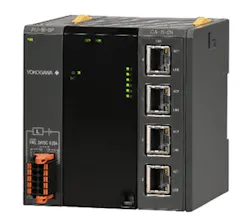
A8 model OpreX is an intelligent, embedded, edge controller that provides real-time control, advanced software architecture and development efficiency. It’s built on the widely used Ubuntu 24.04 Linux distribution, and applies real-time patches, ensuring high-speed responsiveness and reliable deterministic performance.
A8’s centralized Data Stream software development architecture consists of a centralized mechanism that’s focused on data rather than hardware dependencies. This capability unifies device access, and continuously streams I/O data for intuitive, tag-based interaction—shifting development from hardware-dependent coding to a fully data-centric approach that boosts reusability and shortens engineering cycles. Coupled with an extensive control function library, including motion control, PID control and EtherCAT MainDevice support, these functions let A8 perform rapid system integration, which lets users build robust equipment control systems with greater speed, flexibility and confidence. This architecture also lets the control software seamlessly absorb variations in equipment design, functionality and operating conditions.
In addition, each data point A8 processes is tagged with a high-precision, ±1 μs timestamp. This enables time-driven control logic, offers accurate traceability of equipment behavior, and captures exactly when, what and how each device moved. In multi-controller architectures, up to 16 A8 units can be tightly synchronized, enabling high-precision coordinated control, even in distributed systems where communication delays typically present challenges. The result is improved reproducibility, better diagnostics, and more reliable system performance.
Thanks to Ubuntu, A8 provides seamless compatibility with mainstream AI frameworks and open-source software. Combined with its timestamped data for precise time-series analysis, the platform enables efficient development of AI-driven applications, such as anomaly detection, predictive diagnostics and advanced model training, and supports the shift to smarter, more autonomous equipment.