Study shows magnetic flowmeters remain water sector's default flow measurement
Key Highlights
- Much of the current magmeter market isn't new installations, but swapping out mechanical and analog-era meters installed between the 1960s–1990s.
- Magnetic flowmeters are one of the few technologies (along with Doppler ultrasonic) that handle solids-laden and conductive liquids well.
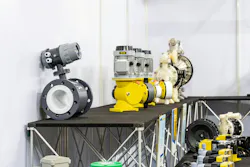
Water and wastewater utilities continue to drive the global magnetic flowmeter market, according to a new industry study from Flow Research. The report, The World Market for Magnetic Flowmeters, 8th Edition, puts 2025 global sales at $2.1 billion and projects the market will grow to more than $2.6 billion by 2030 — a compound annual rate of 4.9 percent.
Water and wastewater applications now represent the largest single industry segment for magmeters, ahead of food & beverage and chemical processing. Two forces are behind that lead: expanding water infrastructure in growing and urbanizing regions, and the replacement of equipment installed decades ago in mature systems.
Why utilities keep choosing magmeters
For engineers weighing flow technologies, the case for magnetic meters in water service comes down to a few operating characteristics: they introduce no pressure drop, require little maintenance, and—unlike most other flow technologies—perform reliably in dirty or solids-laden liquid. That combination has made them the standard choice for treatment plant influent and effluent lines, sludge pipelines, pumping stations, and distribution networks, where turbine, Coriolis, ultrasonic transit-time and vortex meters are more likely to struggle.
Their one significant limitation is that they require a conductive fluid, which rules out hydrocarbon service—a nonissue for most water and wastewater applications but the reason magmeters have limited presence in oil and gas.
A replacement wave in older systems
A large share of current demand isn't from new installations but from replacing instrumentation installed between the 1960s and 1990s, much of which is now obsolete—mechanical meters, differential-pressure meters and early-generation magmeters with analog electronics. In North America, Europe and Japan, where municipal systems were largely built out in that era, utilities are swapping this equipment for meters with better diagnostics, lower maintenance needs and digital communications.
Non-revenue water is a related driver. In many municipalities, as much as 14% of treated water is lost before it reaches customers. That loss rate has pushed utilities toward deploying magnetic flowmeters to build out district metered areas—subdividing the distribution network so leaks can be localized faster.
Technology trends to watch
The study points to two ongoing shifts in meter design relevant to installation planning:
- Battery and wireless options are expanding where meters need to go in hard-to-reach locations without ready access to power or wiring; and
- Two-wire designs are gradually taking share from traditional four-wire configurations. Two-wire meters have historically been power-constrained, but units running on a Foundation Fieldbus network now have access to substantially more power than earlier two-wire designs allowed.
Magnetic flowmeters were first sold commercially in 1952 — earlier than any other new-technology flow meter, including ultrasonic (1963), vortex (1969), and Coriolis (1977). That head start has translated into the largest installed base among new-technology meters: more than 70 suppliers now offer magmeters worldwide, and the technology led both revenue and unit sales among process-industry flowmeters in 2025, ahead of Coriolis in revenue and by a wider margin in units.
