Powering a smarter, scalable future for bioprocessing
Key Highlights
- The bioprocessing industry must unify platforms that integrate equipment, data and workflows in real time.
- Integration reduces manual processes and enables more efficient, scalable production of therapies.
- Bio Pilot creates a single operational environment covering both upstream and downstream processes.
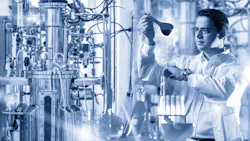
Innovations, such as bioprocessing, are redefining the life sciences industry by reshaping how therapies are developed and delivered. Bioprocessing using living cells, microorganisms or enzymes to manufacture products, and its global market is expected to reach more than $100 billion in 2026. But that can’t happen without the ability to unify control systems and instrumentation into streamlined, scalable solutions for producing new products and getting them into the hands of consumers.
Shahzad Khan, a global systems consultant for Yokogawa’s Life Business Unit, recently discussed how the company’s Bio Pilot integrated automation and data intelligence platform delivers real-time analytics, streamlined automation, and compliance-ready workflows from R&D to full-scale production, to usher in a new era of operation excellence for the life sciences.
Q: Bioprocessing today is fragmented and manual. What issues does that cause for operators, and what needs to be improved?

A: Today’s bioprocessing environments remain heavily fragmented, with equipment, instruments, and software that were never built to operate as a cohesive system. Operators are forced to navigate between bioreactor interfaces, PAT tools, offline analyzers, and even paper-based SOPs—each using different communication protocols and software platforms. This lack of integration leads to extensive manual data entry, constant cross‑checking of parameters, and time‑consuming efforts to align timestamps, verify samples and synchronize process data.
The result is a heavy operational burden that increases variability, slows decision‑making, and heightens the risk of human error that directly affect batch quality, consistency and reproducibility. What’s needed is a truly integrated operational environment that connects all data sources in real time, minimizes manual touchpoint and empowers operators with guided, automated workflows. This shift allows teams to concentrate on optimizing processes rather than reconciling systems.
Q: How can Bio Pilot help, especially to unify upstream and downstream process?
A: Bio Pilot serves as the neutral, vendor‑agnostic integration layer the bioprocessing industry has long needed. Rather than treating upstream and downstream operations as separate domains, it unites them within a single operational environment. Bio Pilot seamlessly connects bioreactors, Raman systems, medium analyzers, cell counters, offline instruments, pumps, skids and even DCS or PLC systems—creating a cohesive data and control layer across the entire process.
In upstream operations, it synchronizes equipment and analytics so data flows continuously and process automation can be executed with confidence. Downstream, it applies the same integration principles to clarification, chromatography, UF/DF, filtration, and viral‑clearance steps, enabling centralized monitoring and coordination from one platform. By standardizing data flow and orchestrating actions across systems, Bio Pilot eliminates the silos that traditionally separate unit operations. The result is a unified, end‑to‑end process where seed train, production, purification, and final conditioning function as one connected, predictable workflow—not a collection of disconnected tools
Q: Explain the significance of Bio Pilot’s no‑code workflow editor.
A: Bio Pilot’s no‑code workflow editor transforms traditional SOPs into dynamic, automated processes—without requiring any programming skills. For operators on the floor, this means clear, guided execution with step‑by‑step instructions, built‑in validations, and intelligent decision branches that adapt to process conditions in real time. Routine tasks such as feeding, sampling, PAT‑triggered actions, and equipment checks become automated and consistent, reducing cognitive load and minimizing run‑to‑run variability.
Get your subscription to Control's tri-weekly newsletter.
Just as importantly, the editor captures expert know‑how directly within the workflow logic, preserving institutional knowledge and ensuring every operator follows the true process design, not a personal interpretation of it. The result is faster training, fewer errors, and a more reliable path from SOP to execution—turning static instructions into actionable automation teams can trust.
Q: What are some real-world impacts of Bio Pilot?
A: Bio Pilot has already demonstrated measurable impact across diverse real‑world applications. For example, in scaled studies from 2 L to 20 L, it enabled consistent glucose control by combining Raman analytics with model predictive control (MPC), delivering reproducible VCD and titer profiles—an essential factor for successful scale‑up.
In collaboration with Repligen’s MAVERICK system, Bio Pilot sustained fully autonomous operation for two continuous weeks, maintaining precise glucose and amino‑acid feeds with no operator intervention other than routine sampling. During perfusion processes, it balanced multiple pumps simultaneously to stabilize fresh, recycled, and spent media flows, preventing the drift that typically undermines long‑term culture stability.
In AAV vector production, Bio Pilot reduced batch failures by detecting abnormal conditions early and guiding operators through corrective SOP steps via built‑in decision logic.
Across these applications, Bio Pilot consistently improves reproducibility, stabilizes control, lowers manual workload and transforms advanced analytics into practical, closed‑loop performance that teams can trust in production environments.
Q: The real-world use cases mentioned are upstream. How do the benefits extend into the downstream?
A: Downstream processing has long been one of the most complex and costly stages of biomanufacturing—and historically, one of the least automated. This makes it more prone to variability and operational risk. Bio Pilot addresses these challenges by extending the same level of integration, automation and real‑time insight proven in upstream operations to the downstream space.
The platform seamlessly connects with clarification systems, depth filters, centrifuges, chromatography columns, TFF and UF/DF skids, and viral‑clearance units, bringing all these steps into one coordinated environment. Bio Pilot continuously tracks critical parameters such as turbidity, pressure, flow, conductivity, temperature, and UV absorbance, aligning those data streams to drive automated control and decision logic across purification operations.
This orchestration stabilizes processes that are typically manual and variable, enhances reproducibility across batches, and significantly reduces operator workload. Ultimately, Bio Pilot helps ensure consistent, high‑quality output from harvest through to purification.
