International Paper adopts AI-assisted analytics
Key Highlights
- International Paper is adopting Seeq’s AI tools to migrate from manual data reporting to automated, scalable insights across 15 U.S. mills.
- Agent Q enables rapid, natural language-driven exploration of process data, helping users identify performance issues and root causes more efficiently.
- Agent Builder automates multi-step analysis workflows, producing consistent reports that include alarms, insights and AI recommendations, reducing manual effort.

It’s great to know what you’re looking at and what’s happening, but it’s always better to get those views and context faster.
For instance, International Paper in Memphis, Tenn., recently started exploring how its 15 U.S. containerboard mills could migrate from traditional manual reporting and data movement to delivering context-driven and scalable insights.
It began by conducting a trial of Seeq Intelligence software, including some of its most recent, artificial intelligence (AI)-based innovations, such as Agent Q, Agent Builder and Insight Boards to gain insights from its data more quickly, make them more easily available to its users, and scale them out. The trial consisted of an asset health monitoring project that included production areas, sub-areas, instrumentation and other components, and it used principal component analysis (PCA) inputs for anomaly detection.
“We didn’t have a problem. We had an opportunity because we’ve already been using Seeq Workbench software to create analyses, formulas and modeling, as well as reporting that requires data to be moved to Power BI, Organizer and Datalab software to carry out other reporting and presentation functions,” says Cameron Cox, data scientist on International Paper’s cost innovation and remote analytics team, which supports the company’s more than 400 manufacturing facilities and approximately 37,000 employees worldwide. Cox presented “Two paths to automated reporting: Insight Boards and Agent Builder reports” at Seeq’s Conneqt 2026 event earlier this year. “The opportunity was to keep further insights within Seeq, retain its trusted analyses, and perform fewer data movements, but still be able to provide different insights for different audiences without duplicating efforts, whether it’s looking at one mill or 15 plants.”
Insights from Agent Q
In the first part of its trial, Agent Q let International Paper leverage its process data with AI. It sits with other software agents as part of Seeq Intelligence, and lets users view additional insights within their data. More specifically, it helps with:
- Faster insight generation by using natural language prompts that enable rapid creation of signals and visuals.
- Understanding what matters, which helps identify useful KPI‘s, behaviors and conditions worth monitoring.
- Shaping reporting concepts that serve as a discovery tool for understanding what questions reporting should answer, in this case, about asset health monitoring.
Agent Q’s quickly generated, colorful bar charts show obvious performance concerns, but they also indicate the agent’s reasons for how it displays its graphics, which helps users with validation and understanding how its charts are created. As with most agents, Cox reports that Agent Q required specific details and thoughtful prompts—and practice developing them—to generate useful results.
“Agent Q is great for exploration and quick insights, and is flexible by letting users ask questions involving Seeq Workbench and other software tools,” adds Cox. “One of our process engineers told us, ‘By using Agent Q, I was able to find the root of less-controlled signals by letting it correlate the responses, and consider cascade delays. Think of it as fast-paced, root-cause analysis (RCA)-type feedback.’”
In essence, Agent Q lets users ask what’s happening in their process, or what caused productivity to decrease? However, while Agent Q’s explorations yielded valuable analyses and results, Cox adds that its responses were manual and inconsistent on different days, which showed that varied audiences needed suitable reporting formats.
To gather Agent Q’s outputs into consistent, repeatable, everything-in-one-place reports, Cox’s team implemented the Seeq Journal text documentation feature in Workbench, which can produce reports for today, tomorrow, 30 days or other periods. They also collected metadata from individual prompts in Journal, which enabled Agent Q to compile data, produce tailored reports, and relay them to predetermined Organizer software or other destinations.
Agent Builder reports in
In the trial’s second phase, Journal also allowed International Paper’s users to learn about and use Agent Builder, which allows reports to be generated according to certain times, events or other, more sophisticated triggers. Agent Builder and its nodes let Cox’s team automate the functions they developed in Journal, turn them into an agent, and get another step closer to fully automated reporting. Its primary functions include:
- Automating the agent’s reasoning process by creating multi-step logic to run analyses and assemble outputs automatically.
- Shifting from analysis to output with agents that can do the work and generate reporting artifacts.
- Learning that reliable reporting depends on repeatable execution paths and clear intents.
“Built from Workbench or Seeq Vantage analyses, Agent Builder uses plant-floor input to produce mill-level reports answering questions at that level, automates its multi-step execution procedure, and delivers outputs supporting prioritization to organizers, leaders and operators,” explains Cox. “These reports include an executive summary of alarms and other events over 30 days or other preset periods, as well as other insights and graphics, or AI-based recommendations about where to focus time and effort.”
Get your subscription to Control's tri-weekly newsletter.
Insight Boards show and tell
In the trial’s third phase, Cox’s team explored Insight Boards, which likewise enable operational visibility in three primarily graphical ways, including:
- Answering daily questions, such as how am I performing? What’s happening right now? And where should I look?
- Maintaining a continuous awareness design that’s built to detect outliers and anomalies by monitoring KPIs drifting over time, and identify emerging and urgent issues.
- Providing stable, trusted views, such as fixed layouts and saved visuals, which provide consistent, day-to-day interpretations, as well as the ability to generate quick graphics for one-off meetings, which can also be shared among users.
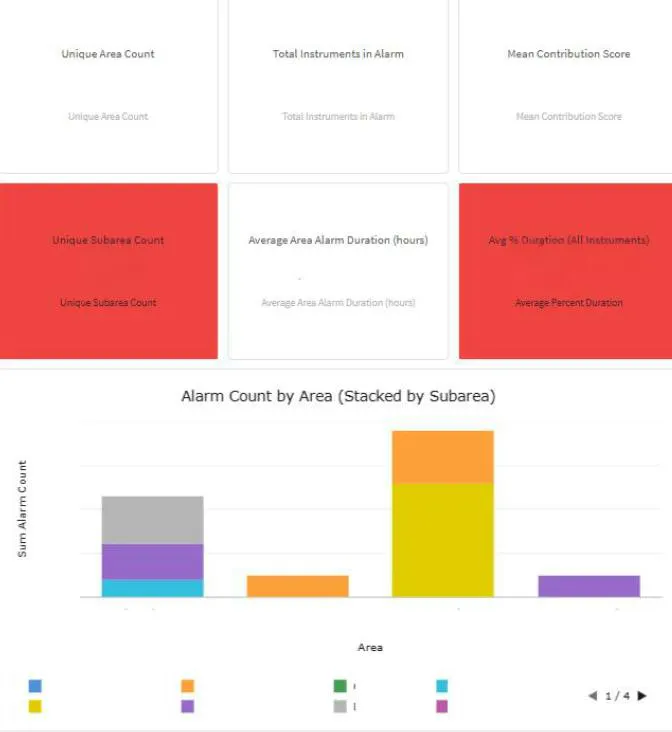
In practice, Insight Boards include:
- Daily operational view that’s used as a standing display of current process conditions during reviews each day.
- Consistent context across users by applying the same metrics and visuals that are seen daily, which reduces possible reinterpretations.
- Highlights items that deserve attention, which makes it easier to spot outliers, drift and emerging issues worth investigating.
- Supports a “where do I look?” function that provides direction without prescribing a root cause or corrective action.
“Insight Boards distills insights for time-series analytics that will be actionable at the plant manager level and above,” adds Dustin Johnson, CTO and founding partner at Seeq. “It builds on other Seeq applications, such as Workbench, Organizer, Datalab and Vantage, and can help users develop dynamic boards and interactive conversations. For example, Intel adopted Agent Builder to automate workflows for its tools, and now they can kick off when predefined events occur that Seeq identifies, such as batch cycles or ambient humidity that deviate from previously assigned conditions. When a deviation occurs, it triggers or schedules new agentic processes, workflows and software capsules in Agent Builder to direct the process and its users to better, data-driven decisions, and drive other needed changes.”
Sheet-break alarm and investigate
During its Seeq Intelligence trial project, International Paper used Workbench, Vantage and Journal in conjunction with Seeq’s AI-enabled Agent Q, Agent Builder and Insight Boards to develop a sheet-break monitor and alarm capability for its paper machines. It included an e-mailed software evidence packet with event timing, grade context, registered centerline evidence ranked contributors, falsifier checks and links to Seeq applications.
“These elements can historize and characterize an event, and use agents in a decision loop to turn evidence bundles into detailed analytics and actionable decision options,” says Cox. “Custom agents from Agent Builder interpret the packet and distribute additional context. Vantage and Insight Boards preserve the decision history. For every relevant machine process variable, centerline limits are calculated on top of Seeq conditions, which are sliced as needed, and reused across other event packets depending on the needs of different paper grades and machines. These investigations can then be rolled up into larger trends and recommendations.”
In the near future, Cox reports that International Paper plans to use Insight Boards in its daily mill work flows to validate value, identify gaps, and demonstrate operational impacts. It will also gather and apply structured mill feedback on Insight Boards for operational useability, and present them in Agent Builder reports and workflows to enable prioritization and summaries.
This is part one of Control's October 2026 data analytics feature. Read all installments here.
About the Author
 Jim Montague
 Leaders Logo
Leaders relevant to this article: