Tender, loving cold box care
Key Highlights
- The Fisher IC2 valve is rated for CL600 pressure and available in sizes from 1 to 4 inches, with future options expanding its application range.
- It incorporates cryogenic enhancements such as a fluid baffle and narrow extension diameter to improve performance and energy efficiency.
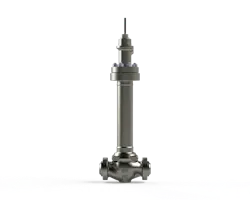
It’s not easy to keep cold boxes and their cryogenic contents comfy, mainly because they appreciate -198 °C (-325 °F), but they enjoy -269 °C (-425 °F) even more. The heat exchangers, distillation columns, piping and valves in these insulated enclosures demand super-low temperatures for air-separation processes, and increasingly for liquid natural gas (LNG) and hydrogen liquefaction applications.
The problem is it’s extremely difficult to incorporate recent technical improvements, new capabilities and updated designs in these beyond-frosty settings. Plus, operating in cryogenic environments can be challenging due to product and energy losses from emissions, which reduce profitability, increase maintenance costs, and raise regulatory concerns.
To help users overcome these challenges and gain new capabilities, Emerson is introducing its Fisher IC2 top-entry, cryogenic globe valve that meets the stringent demands of these extremely low-temperature environments, and includes cryogenic enhancements, such as a narrow extension diameter and fluid baffle. It’s rated for the CL600 pressure class, and is available in 1 in. to 4 in. line sizes (DN25 to DN100), with more options forthcoming.
“There have been many recent opportunities for new designs in cold boxes and air-separation technologies, and they’ve inspired innovations that can reduce leaks, improve sealing, and keep fluid in valves,” says Brendan Leslie, product marketing manager for flow control development at Emerson. “These new designs are based on capabilities that customers would like to see, such as being able to use cryogenics in emerging LNG and hydrogen applications, so we’re also making valves more energy efficient, which is why we keep diameters narrow, especially near the end of longer, stick-style valves.”
IC2’s components work together to minimize heat conduction, and reduce the energy required to maintain process fluid temperatures, while enhancing overall operational sustainability. Of course, another crucial part of any cold-box’s mission is fending off ambient, environmental temperatures, even though its valves must be accessible by users on the outside. IC2’s Fisher enhanced Enviro-Seal packing system and bellows limits leakage to a maximum of 100 parts per million by volume, meeting or surpassing the U.S. Environmental Protection Agency’s standards.
Get your subscription to Control's tri-weekly newsletter.
“It’s essential for valves in cold boxes to have sufficient packing on the upper side, such as Enviro-Seal, so they can maintain optimal temperatures in those areas and avoid freezing,” explains Leslie, who adds that appropriate packing also means users don’t have to access cold boxes as often for servicing, which saves on potential emissions and product loss. “These tasks were a lot harder in the past, which is why we’re always striving for better sealing.”
IC2 control valve also provides longevity with hardened trim materials, and metal-to-metal seating. When maintenance is necessary, IC2 offers simple serviceability via features such as top-entry, single packing nut, modular stem assembly, independently replaceable bellows, replaceable valve plug and seat ring, and a special tool for seat ring removal.
“Valves serving cold boxes have to walk a tightrope between maintaining extreme cold inside and interfacing with ambient temperatures outside, and this is where IC2 achieves its primary innovations and benefits,” adds Leslie. “We talked with one customer about a month ago, and they hadn’t used a cryogenic product like this before. However, because they know Fisher and Emerson, they were able to trust it would meet the needs of their end user, and give them all the regular control valve capabilities, but this time for long-stem valves in these extremely harsh settings.”
