pH ORP sensor keeps its head
Key Highlights
- Emerson’s Rosemount 350A sensor is designed for high-temperature and high-pressure applications, capable of measuring up to 155°C and 400 psig.
- It utilizes digital communication protocols like Modbus RTU and RS 485 for interference-resistant data transfer and simplified wiring.
- The sensor features rebuildable double junction reference and contamination-resistant electrolyte options to extend sensor life and reduce maintenance.
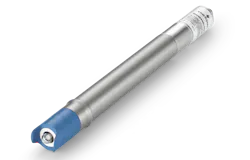
Staying cool under pressure is a much-prized human attribute, but as most process professionals know, it’s just as useful for sensors and other hardware. For instance, it gets progressively more difficult to measure pH, oxygen reduction potential and other parameters as process temperatures and pressures increase, and in extreme settings, gathering and communicating those signals can become close to impossible.
To overcome these challenges—and even make it look easy—Emerson is introducing its Rosemount 350A high-performance pH/ORP sensor. Built for severe service, it measures pH and ORP in high-temperature, high-pressure processes and other harsh, liquid applications up to 155 °C and 400 psig, and lets users maintain their critical measurements despite difficult process conditions.
“We could measure pH/ORP before, of course, but Rosemount 350A can do it at really high temperatures and pressures. Its other big advance is that it uses much more robust, digital communications from the sensor to the transmitter via Modbus RTU and RS 485 protocols,” says Kevin Stultz, senior manager of liquid analysis at Emerson. “These robust communications weren’t available before, which is important because pH measurements are analog in millivolts, which are sensitive reading that are susceptible to electromagnetic (EMC) interference.
“Modbus also helps with the wiring, which is important because pH sensors need to be replaced every few weeks or months, and this used to be a cumbersome task because they usually had around 10 wires, which took 10-15 minutes to power down and reach the terminal block. Rosemount 350A has one M12, five-pin cable that can be connected in 5 seconds.”
Get your subscription to Control's tri-weekly newsletter.
Rosemount 350A also has several primary capabilities that allow it to reduce maintenance, extend sensor life, and support stable process control, including:
- Rebuildable double junction reference and selectable electrolyte-solution options help reduce drift, resist contamination, and support longer service intervals.
- Dependable pH and ORP performance despite fouling or coating, and electrolyte options that resist oil, metals, biofilm, poisoning or scaling.
- Health diagnostics, stored calibration history, and stored process data identify sensor drift sooner, enable planned service before performance declines, reduce unplanned downtime, and allow faster replacement.
- IP67/IP68 ingress protection protects against water and dust in demanding conditions.
“Storing all its data in the sensor itself is big news because it no longer matters what transmitter is being used. This means users no longer have to calibrate this sensor in the field, and can instead take it out of the process, and bench calibrate it using a transmitter back at the lab,” explains Stultz. “Previously, calibrating for analog signals required the sensor to be physically at the transmitter they planned to use, which was usually out in the field. Because all its data remains in the sensor, and it doesn’t matter which transmitter is used, calibration is much more flexible and convenient for users. Now, they can just quickly switch out bench-calibrated sensors—which is even faster with the M12 connector—and don’t have to waste so much time in the field.”
In addition, Rosemount 350A features:
- 7-, 21- or 36-inch long, retractable titanium mountings,
- Polyphenylene sulfide (PPS) body material,
- EPDM, FKM, or FFKM o-ring options.
- Compatibility with Rosemount 1058 dual-channel transmitter, and
- Required Rosemount 102C cable that can be ordered separately
“Rosemount 350A has a pH/ORP sensor that uses a measurement electrode and a reference electrode to generate a millivolt potential. However, it’s digital, internal diagnostics allow it to monitor its own health,” adds Stultz. “This health indicator lets the sensor know its own limits, so it doesn’t need to be configured as frequently, and if there’s a failure, it will be recorded in its log.”
