Double-duty, wireless gas monitor
Key Highlights
- Rosemount 928 is the first integrated WirelessHART gas monitor with hot-swappable, self-diagnostic sensor modules for toxic and combustible gases.
- It can classify gases into six types, including hydrogen, methane and hydrocarbons.
- The device operates in extreme temperatures from -40°F to 140°F and is certified for hazardous locations worldwide.
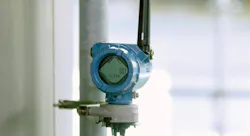
Just as talented and successful employees gain new responsibilities, devices that demonstrate their value in one application may also be assigned new roles, and acquire added capabilities for accomplishing them.
For instance, Rosemount 928 wireless gas monitor had been doing such a good job measuring toxic gases that its developers reasoned its technology might do the same for users seeking better ways to measure combustible gases, especially in remote and often unpowered settings. These users typically employed catalytic beads or infrared sensors to detect combustible gases. However, these methods aren’t as simple and effective as the sensors that Rosemount 928 uses to measure the thermal conductivity of combustible gases, and consequently determine their amounts and even types.
“This sensor technology is a significant departure because it’s really a new way to measure combustibles,” says Dave Ruhland, global products manager for flame and gas at Emerson. “Rosemount 628’s sensors can now measure combustible and toxic gases in a single platform. However, what’s most important is it doesn’t just quantify how much combustible gas, but also classifies it as one of six types, including hydrogen, hydrogen mixtures, methane and natural gas, and light, medium and heavy hydrocarbons based on their molecular weights.”
Rosemount 928 is the first integrated, WirelessHART, toxic and combustible gas monitor with Emerson’s hot-swappable sensor modules, which have end-of-life diagnostics, and can be installed in the field with one hand and no tools. It’s designed to operate in ambient temperatures ranging from -40 °F to 140 °F (-40 °C to +60 °C). It also features a large, liquid-crystal display that clearly shows gas concentration and transmitter diagnostics; optional discrete output for activating field alarms; and hazardous location approvals for worldwide use. For example, a fitted filter maintains IP66 ingress protection.
Because ability always needs capable support, Rosemount 928’s sensing innovations are assisted by its wireless capabilities. While traditional transmitters are proven and reliable, they typically require wired infrastructures for power and communications. Rosemount 928 is free of these constraints, so it can dramatically reduce installation and maintenance costs.
Get your subscription to Control's tri-weekly newsletter.
Rosemount 928’s second major innovation is that it’s replaceable, intrinsically safe (IS), lithium-thionyl chloride power module provides a service life of more than three years when used with Rosemount 628EC toxic gas sensor, and at least 1.5 years when used with Rosemount 628MP combustible gas sensor. Ruhland reports the sensor was modified to sleep when not in use, which lets it conserve power, and extend battery life.
“Knowing the type of gas it’s dealing with means Rosemont 928’s 628 combustible gas sensors can automatically correct their calibration curves,” explains Ruhland. “This produces much more accurate, detailed and faster responses, such as overall gas percentage levels in 10 seconds instead of 20 seconds, so the sensor is accurate even if a different gas is detected.”
“Rosemount 628 combustible gas sensors are calibrated for a lifecycles that’s expected to be more than 10 years,” adds Ruhland. “This is possible because they’ve got solid-state electronics, and auto-zero algorithms in their software.”
Because Rosemount 628 toxic gas sensors are smart, they retain their own calibration information. They must be connected to a Rosemount 928 transmitter to calibrate, but their calibration settings are stored in the sensor itself, and not in the transmitter. This allows a 628 sensor to be uninstalled from a 928 transmitter, and reinstalled in another transmitter without affecting its calibration. The transmitter automatically recognizes the sensor. Built-in end-of-life diagnostics on these H2S and CO sensors alert users when sensor replacement is necessary.
