Advancing process safety in an automated press brake work cell
Key Highlights
- Safety must be designed in from the start, not added after the fact.
- Layered safeguarding outperforms any single solution.
- Process safety is iterative, not a one-time deliverable.
- Productivity and safety are complementary goals.
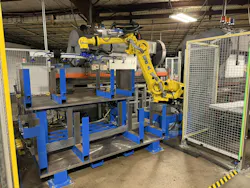
As manufacturers continue to modernize production environments, automation is increasingly evaluated not only for its impact on throughput, but also for its ability to reduce operational risk. This is especially evident in metal fabrication processes, where legacy equipment often requires operators to work near hazardous motion. In these environments, improving process safety is as critical as increasing productivity.
This dynamic was key to a recent project led by system integrator Bright IA, which involved the development of an automated work cell for a press brake application. To support the initiative, Bright IA partnered with Valin to design and implement mechanical infrastructure and safeguarding systems to ensure performance and safety. The result was a system that demonstrates how thoughtful integration of automation and safety engineering can transform a high-risk manual operation into a controlled and efficient process.
Identifying risk
The application focused on producing metal fenders for trailers, a process that historically depended on manual loading and unloading of a press brake. Operators were responsible for positioning metal plates into the machine and removing them after forming, a repetitive task that required constant interaction with moving equipment.
This approach presented several well-understood safety risks. Operators were routinely exposed to pinch points and crush hazards at the point of operation, while the physical demands of handling metal plates introduced ergonomic strain. Over time, fatigue could increase the likelihood of errors, further elevating risk. At the same time, the manufacturer faced ongoing challenges in recruiting and retaining workers for such physically intensive tasks.
The need to increase production while reducing the risk to the workforce and enabling them to move into supervisory roles created a strong incentive to automate. However, the success of such an initiative depended on more than simply replacing manual labor with robotics. It required a deliberate effort to eliminate or control hazards through design, ensuring that automation would reduce risk rather than introduce new vulnerabilities.
Retrofitting automation
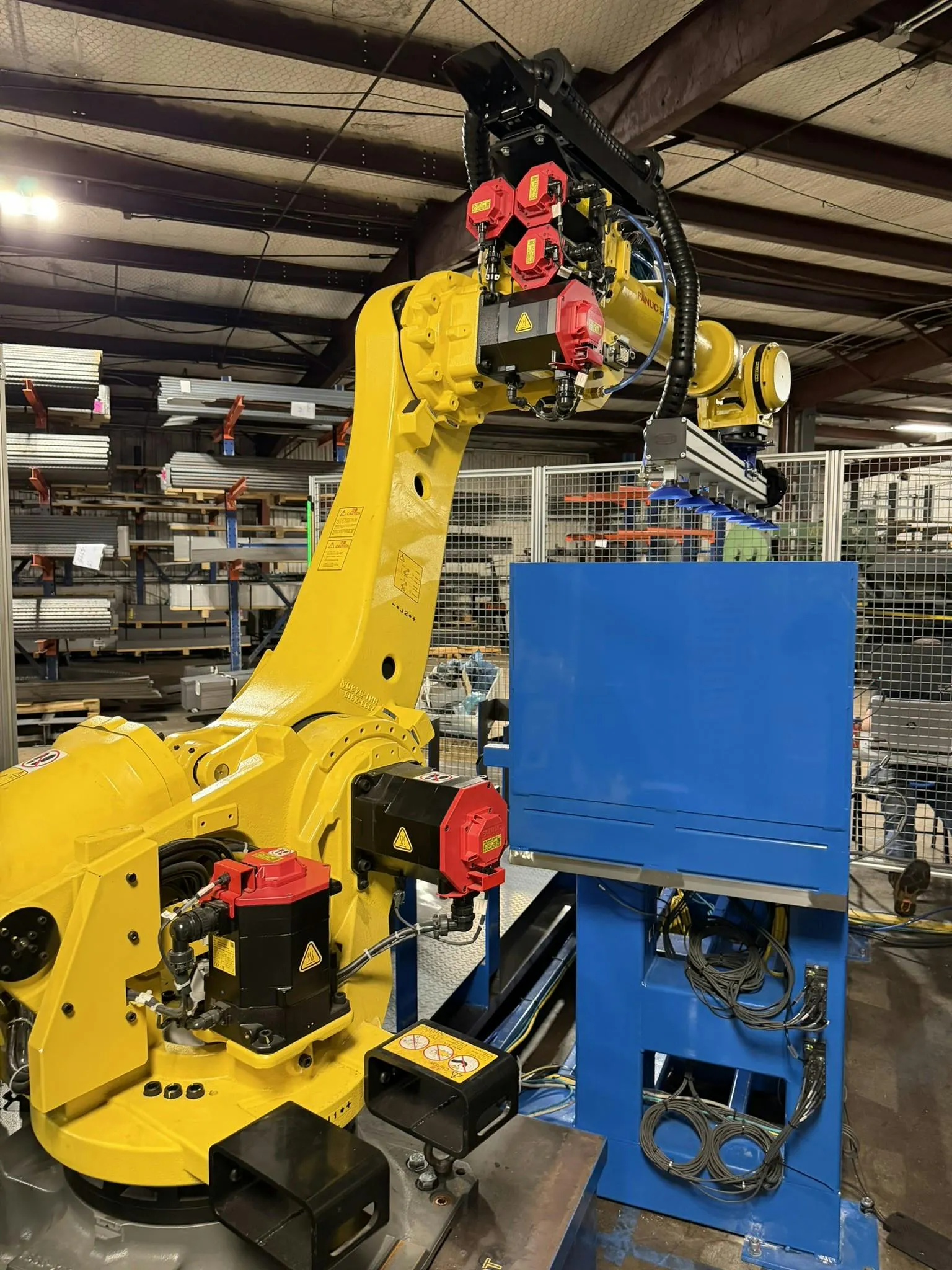
The press brake was not designed for automation, and the surrounding environment reflected years of incremental use rather than optimized layout. Uneven floors, inconsistent mounting surfaces, and a constrained footprint created challenges that could affect both system reliability and safety. Misalignment or instability in such conditions can lead to unpredictable equipment behavior, increasing the risk of jams or unplanned interventions.
To address these challenges, Valin was engaged to design and fabricate the structural framework required to support the automation system. This included the infrastructure for material handling as well as the physical elements of the safeguarding strategy. The design process involved multiple iterations to ensure that the structures could accommodate the constraints of the existing equipment while providing the stability necessary for safe and repeatable operation.
Engineering predictable material handling
Material handling played a central role in the overall system design. The automated cell relied on a series of timing belt conveyors to move metal plates into and out of the press brake. Ensuring consistent and reliable movement of these parts was essential, not only for productivity but also for maintaining safe operating conditions.
Valin designed custom support frames to integrate the conveyors within the limited space available. These structures were engineered to provide both rigidity and adjustability, allowing precise alignment during installation and commissioning. This capability proved critical in compensating for inconsistencies in the existing environment.
From a process safety standpoint, stable material handling reduces the likelihood of disruptions that could require operator intervention. In manual systems, jams or misfeeds often necessitate direct interaction with equipment, reintroducing exposure to hazards. By creating a controlled and predictable conveyance system, the design minimized these scenarios and supported a more hands-off mode of operation.
Safeguarding strategies
A key aspect of the project was the development of a comprehensive safeguarding approach that combined physical barriers with control-level protections. Valin designed and supplied perimeter fencing that clearly defined the boundaries of the robotic work cell, preventing unintended access to hazardous areas during operation.
The fencing layout was carefully adapted to the constraints of the facility, ensuring that it provided effective protection without impeding necessary access for maintenance and material flow. Design considerations included the placement of access doors and the elimination of gaps that could compromise the integrity of the barrier system.
To enhance this physical safeguarding, safety door interlock switches were installed at all entry points. These devices ensured that opening a door would immediately stop system operation and prevent restart until all access points were secured. This created a layered safety architecture in which hazards were both physically isolated and electronically controlled.
The overall approach aligned with OSHA requirements and reflected established best practices in machine safeguarding. By integrating these elements into the system from the outset, the project reinforced the principle that safety should be designed into the process rather than added as an afterthought.
Installation
As with many retrofit projects, the transition from design to installation revealed additional challenges. Variability in the press brake and surrounding environment required adjustments to ensure proper fit and alignment. These conditions had the potential to impact both system performance and safety if left unaddressed.
Get your subscription to Control's tri-weekly newsletter.
The use of a modular aluminum extrusion framework proved particularly valuable during this phase. The system allowed for efficient in-field modifications, enabling the team to adjust component positioning and reinforce structures as needed. This flexibility reduced the need for extensive rework while ensuring that the installation met both functional and safety requirements.
During commissioning, further refinements were implemented based on observed system behavior. Conveyor alignment was fine-tuned to improve reliability, and sections of the safeguarding system were strengthened to address potential weak points. Personnel provided on-site support throughout this process, working collaboratively with Bright IA to resolve issues and optimize the system.
This iterative approach highlights an important aspect of process safety: it is not a static outcome, but an ongoing effort that continues through installation and into operation. The ability to identify and address risks in real time is essential to achieving a truly safe system.
Long-term safety
Beyond initial implementation, the structural system was designed to support long-term adaptability. The modular T-slot framework allows components to be repositioned or expanded as production needs evolve. This capability enables maintenance teams to adjust without significant disruption, whether to improve efficiency or address newly identified risks.
From a process safety perspective, this flexibility supports continuous improvement. Additional guarding can be added, clearances can be adjusted, and new safety devices can be integrated as needed. This ensures that the system remains aligned with evolving standards and operational requirements over time.
Results
Once operational, the automated work cell delivered a significant increase in production throughput, achieving more than double the output of the previous manual process. While this improvement was notable, the impact on safety was equally important.
By removing the need for operators to interact directly with the press brake, the system eliminated routine exposure to some of the most significant hazards in the process. Material handling was transitioned to a controlled, mechanized approach, reducing physical strain and minimizing the potential for injury. Operators were able to remain outside the work cell during operation, interacting with the system in a safer and more controlled manner.
The integration of fencing and interlocks further reinforced this separation, creating a well-defined boundary between personnel and hazardous motion. This layered approach to safeguarding significantly reduced the likelihood of incidents and contributed to a more predictable operating environment.
Safe automation
This project illustrates how automation, when implemented with a strong emphasis on process safety, can deliver meaningful improvements in both performance and risk reduction. By addressing safety at every stage, from structural design and material handling to safeguarding and installation.
As manufacturers continue to integrate automation into legacy environments, this approach provides a valuable model. It demonstrates that productivity gains and safety improvements are not competing objectives, but complementary outcomes of well-executed system design.
About the Author
 Bobby George
 Leaders Logo
Leaders relevant to this article: