Scaling functional safety at one of the world’s largest ethylene plants
Key Highlights
- The Golden Triangle project is a massive $8.5 billion facility designed with safety as a core principle, integrating hazard analysis and functional safety assessments from the outset.
- Stages 1 and 2 of the FSA focus on hazard identification and detailed design verification, reducing costs and preventing delays by catching issues early in the project lifecycle.
- Stage 3 involves final field installation checks, confirming that the physical plant matches the design and performs reliably before startup.
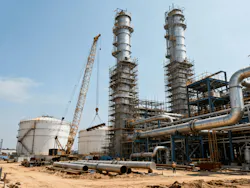
When you design and build one of the world’s largest ethylene and polyethylene facilities, its size amplifies everything—throughput, complexity and operational risk. For Chevron Phillips Chemical and QatarEnergy’s Golden Triangle Polymers Project, that reality kept safety at the forefront of every decision. The objective was to build big, operate safely, and sustain it for decades.
Located in Orange, Tex., about 100 miles east of Houston, the facility will include a 2,080 kilotons per annum (KTA) ethane cracker and two 1,000 KTA high-density polyethylene units. The total cost of the project is expected to be around $8.5 billion (Figure 1).
“Safety isn’t just a goal. It’s a foundational principle that guides every decision we make,” says John Bergen, process control engineer for the ethylene unit at CPChem, who oversees process control, including the plant’s safety shutdown systems. “To achieve that, we ensure every process is designed and managed, so that materials stay safely contained. We want to ensure that all our employees and contractors go home safe at the end of the day.”
With a greenfield complex of this scale, CPChem wanted to ensure nothing was overlooked. That’s why the company viewed its functional safety assessments (FSA) not only as critical to safety, but also as economically beneficial. An FSA is an independent, evidence-based review of a plant’s instrumented protection layers against recognized safety standards. It confirms that hazards are correctly identified, defines required safety functions and safety integrity levels (SIL), and ensures its design will deliver the performance required that the risk analysis demands (Figure 2).
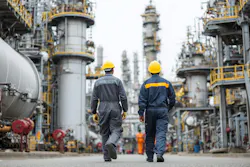
Stages 1 and 2 of the FSA lay the foundation for the project’s entire safety lifecycle. Stage 1 tests the quality of the hazard and risk work, while Stage 2 scrutinizes the detailed design. Performing stages 1 and 2 correctly reduces overall project costs by preventing expensive redesigns, delays and rework later in the process. These early stages are more than technical exercises; they’re also financial safeguards.
“CPChem conducted comprehensive internal risk assessments in collaboration with our design contractor,” explains Bergen. “To strengthen the integrity of our safety approach, we also engaged an independent third party to perform the FSA. Its roles are validating our assessments and design specifications, ensuring nothing is overlooked, and that we meet or exceed all applicable safety standards.”
From risk to readiness
To gain that independent perspective, CPChem engaged SIS-Tech (https://sis-tech.com), a Houston-based engineering firm specializing in process safety management, instrumentation and electrical systems.
Stages 1 and 2 ensure a high-quality design that everyone agrees on. If issues are found early, they’re just changes to a document. Once you get to Stage 3, when the equipment is already installed, delays and costs can skyrocket.
Stage 3 is presently underway at Golden Triangle. It’s expected to give the project its ultimate confirmation by ensuring that what’s installed in the field matches the design, and performs exactly as intended before startup.
Stage 1 gets the hazard picture right
In order for Stage 3 to achieve success, of course, Stage 1 had to first focus on Golden Triangle’s initial hazard and risk analysis. The goal is clarity, which consists of understanding which operational and business risks exist, what protection layers are required, and whether the assumptions behind those layers are sound.
Eloise Roche, senior consultant at SIS-Tech, led the Stage 1 assessment. She describes the process as a “cold-eyed” review that follows strict rules for identifying and describing instrumented protection layers. “It’s about confirming the risk assessment truly matches the process, and that the instrumented protections are independent, fully described, and aligned with the standard,” says Roche.
Roche and SIS-Tech brought a unique perspective to these reviews. They’re long-time members of the ISA 84 committee and contributors to the international IEC 61511 safety standard, which they interpret and helped write.
There’s a big difference between trying to interpret the rules and being part of the multi-year process of crafting them. It’s important to know the intent behind the standard, and how to apply it to different regulatory environments worldwide.
For a mega-project of this scale, that rigor is essential. Multiple companies contribute to Golden Triangle’s design and execution, and responsibilities can blur. Clear documentation of roles and responsibilities is critical, and without it, vital tasks can slip through the cracks (Figure 3).
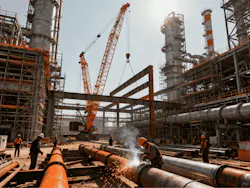
CPChem’s Bergen has seen these challenge firsthand. “We’re building on proven designs from previous facilities, which gives us confidence in the overall concept,” he says. “However, scaling up introduces complexity, more systems, more interfaces and more opportunities for risk. That’s why we place a strong emphasis on detailed planning, thorough documentation and proactive risk-mitigation strategies. The larger the project, the more critical it becomes to be deliberate and precise in how we manage safety.”
Get your subscription to Control's tri-weekly newsletter.
These effort aren’t just about safety. They’re about protecting the business itself. When you’re building bigger, you’re also producing more. If there’s a disruption, the financial impact can escalate quickly from lost production to missed delivery commitments. That’s why early assessments matter so much.
Roche points to three factors that strengthen an assessment team:
- Human performance that looks beyond hardware and logic to policies, procedures and training, and focuses on the people who will use and maintain the systems.
- Seniority and experience, including assessors who have seen enough projects and problems to recognize subtle inconsistencies that can cause trouble years later.
- Standards competence based on a deep familiarity with the current SIS standards and related guidance, plus awareness of likely upcoming revisions.
Stage 2 proves the design will deliver
Using the hazard basis established by Stage 1, Stage 2 shifts an FSA’s focus to determining whether the detailed design for Golden Triangle could deliver the required level of safety performance. This phase is where SIL verification, voting architectures, diagnostics, and proof-test intervals are scrutinized against the hazard analysis. It’s also where human factors and long-term maintainability begin to shape the design (Figure 4).

Stage 2 also laid the groundwork for safe, consistent plant operations after the facility is turned over to its operators. Procedures, proof-test methods, and training materials had to be aligned with the design, so operations and maintenance teams inherit a system they can sustain for decades.
“We believe knowledge sharing is the most powerful safety tool,” says Bergen. “If someone doesn’t understand how a system works, or why it works a certain way, they’re more likely to make mistakes. Our goal is to make it easier to succeed and harder to fail.”
Stage 3 confirms field installation
Construction is now well underway at Golden Triangle. As sections of the plant are completed and turned over, Stage 3 will provide final confirmation that what’s installed matches the design and will perform as intended. Summers notes that Stage 3 also aligns closely with regulatory requirements under the U.S. Occupational Safety and Health Administration’s Process Safety Management and the U.S. Environmental Protection Agency’s Risk Management Plan (RMP).
It’s the final check to ensure everything is installed, tested and ready before a plant can safely start up. It includes inspecting hardware, reviewing test results, and confirming that operations and maintenance procedures, along with training, align with the design.
When functional safety systems work, potential issues are managed seamlessly, and operations continue without disruption. Bergen and the team at the Golden Triangle have their own way of measuring success.
“While this facility is rightfully recognized for its size, we want it to be known for its safety,” Bergen concludes. “High production capacity and high safety standards aren’t mutually exclusive. They go hand in hand. Safety is embedded in our design philosophy, our work processes and our culture. It’s not something we add on It’s something we build in from the start.”
About the Author
Angela Summers
SIS-Tech
Angela Summers is president and CEO of SIS-Tech Inc., and is a licensed professional engineer with more than 30 years of process safety experience. She can be reached at 713-909-2100, via email at [email protected].
 Leaders Logo
Leaders relevant to this article: