Double down on core education — and lifelong learning
Key Highlights
- Foundational degrees in electrical, chemical or mechanical engineering are crucial starting points for aspiring process control engineers.
- Continuous education, certifications and hands-on experience are vital for developing skills in PLC programming, AI, cybersecurity and system integration.
- Industry leaders emphasize the importance of internships, team collaboration and cross-disciplinary knowledge to foster professional growth in automation roles.
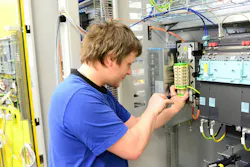
Despite all the accelerating technological changes in recent years, process automation and control operations and facilities still require many essential skills, along with the technical education to instill them in new engineers and operators. However, basic backgrounds in chemical and electrical engineering don’t stop there. They also give new staffers just the right training they need to understand their process operations, make the best use of today’s rapidly digitalizing solutions, and keep up with even more advances in the future.
Phoenix Contact
“Pursuing a profession as a process control and automation engineer can look different depending on the individual's educational background and level of hands-on experience,” says Laura Hertzog, training specialist at Phoenix Contact USA. “When it comes to institutional education, a degree in electrical engineering, mechanical engineering or industrial engineering is a great starting point. Having more technical experience with programming, process control, and instrumentation will always be a plus.”
From a training perspective, Hertzog reports there are many resources and certification courses available. Specifically, honing skills like PLC programming, thermodynamics, calibration and maintenance, and data and AI awareness will help to give candidates a competitive edge.
“Phoenix Contact continues to encourage and support their employees by funding continuing education offers and opportunities,” adds Hertzog. “The International Society of Automation also offers a lot of great courses, including like fundamentals of process control and advanced control and optimization. There's also a network of hands-on, online platforms out there, such as Factory I/O and Matlab.”
Rockwell Automation
To be a good process control engineer, a person must have knowledge and skills in chemical, electrical and mechanical engineering, as well as computer science and networking. Core engineering courses are foundational in obtaining some of this knowledge, according to David Enlow, senior process technical consultant at Rockwell Automation.
“Programming coursework as electives are also great for developing programming skills,” says Enlow. “Coursework in feedback control systems (also elective) can provide a foundation in automation theory and concepts.”
Enlow adds that required skills for process control engineers, operators and technicians remain mostly the same at this time. However, some computer science responsibilities are added due to use of off-the-shelf computers/servers, as well as operating system maintenance, such as patching and cybersecurity, and process information system engineering, management and maintenance.
“Application of basic process control hasn’t changed much, and most plants and associated installations have not changed much either,” explains Enlow. “The desire for more coordination of systems and system modernization due to obsolescence and cybersecurity requirements have forced control engineers to take on additional IT-related responsibilities, including network engineering and server maintenance. People’s expectations regarding applying digitization and AI in process control and automation have increased, forcing automation engineers to develop skills in digitization and artificial intelligence (AI). However, there are still many legacy/obsolete systems that are unable to support desired outcomes established by C-suites and plant management teams.”
Enlow reports there’s enough publicly available information for control engineers to acquire a baseline knowledge of digitization and AI, and become familiar with its concepts. However, he adds that most employers, such as manufacturing, engineering procurement contractors (EPC) and system integrators, are typically ill-prepared to provide meaningful information or training. Automation suppliers and professional associations are investing in information and coursework about these topics, but that content will require time to develop.
“College coursework or online learning academies with specific focuses on AI and data sciences are probably the best, current education sources for automation professionals,” adds Enlow. “Many are offered via distance learning for the convenience of motivated, young professionals. Once professional societies begin to catch up with the digitization needs of their industries, more information, specific studies and use cases may become available for professionals to learn from. However, one of the largest obstacles is a lack of knowledge and experience about applications and use cases that can drive value in automation spaces. Another issue is these technologies are rapidly changing and evolving, so the present carrot being chased will likely not be the same in a year. Therefore, focusing on fundamentals, requirements and value propositions will be key to adoption and further information availability.”
To understanding many of the whys and hows of process automation, Enlow adds that chemical, electrical and mechanical engineering training and skills remain fundamental. They can be obtained in college coursework, along with computer science instruction. Likewise, industrial networking skills can be obtained from multiple sources, including on-the-job training, distance and remote learning, or specialized trade and community college coursework.
“However, the very best teacher is experience, which comes with time in the seat,” says Enlow. “A good controls engineer with the above-mentioned education and training will still need at least five years of experience to become an experienced professional.”
Similar to many contemporaries, Enlow reports that developing process control engineers and operators begins with curiosity and passion.
“A foundational education rooted in core engineering principles is a good start. However, great engineers are developed,” says Enlow. “Their development requires investment by their employers, senior automation engineer and managers, and the employees themselves. An internship program is a great way for everyone to begin developing young automation professionals. It provides a low-cost, no-obligation evaluation period for the employer and automation team, as well as giving the young professional experience, and an evaluation period for them to consider automation engineering as a career.”
Get your subscription to Control's tri-weekly newsletter.
After a young automation professional is hired, Enlow adds their tasks and work can focus on automation that’s essential for their continual development. They should also be involved early and often in capital projects with electricians, instrument technicians and other trades to understand their work. They’ll also learn the drivers for proper automation engineering, and gain experience in dealing with other individuals and teams.
“Working with others and as part of a team will also help them develop interpersonal skills, teach them that they must work across more boundaries, and find ways to communicate and collaborate with people with different skill sets and goals,” adds Enlow. “Being able to find common ground and communicate your intent is tougher than it’s ever been, and developing this skill as an automation professional is essential.”
Enlow concludes that automation and control engineering responsibilities are increasing, and engineers are constantly tasked with accomplishing more with less. These situation includes fewer capital-dollar investments, and constantly increasing automation needs and requirements.
“Applying basic process control hasn’t changed. The science is mostly solid and established. Automation has become even more enabled via technological advances, further merging computer science and automation skillsets,” adds Enlow. “This trend will continue with more edge-focused automation, as well as ubiquitous automation driving more software-focused, hardware-agnostic solutions. These trends will require controls engineers to obtain, maintain and develop computer science and IT-related skillsets beyond what’s currently expected, or these responsibilities will shift to IT organizations that may not understand the unique requirements and skillsets needed in operational technology (OT) environments.”
Schneider Electric
In her nearly 22 years working for Schneider Electric, Rhonda Shah, global human resources VP for industrial automation, process automation and services, observes that automation engineering occupies a unique intersection between electromechanical processes and human factors. She’s also witnessed the discipline evolve from focusing on traditional functions such as motor and valve control to a wider spectrum of digitalized technologies and tasks, which require new types of training to build needed skills.
Fortunately, Schneider provides multiple workforce-support and development experiences, including its Schneider Electric University that offers more than 1,400 courses on topics such as automation, motor control energy management, sustainability, and safety. These include more than 300 free, e-learning courses with self-paced modules available 24/7 online for suppliers, customers and partners. The company organizes in-house training in a multi-year rotation for recent science technology engineering and math (STEM) graduates. Upskilling to implement new equipment and artificial intelligence (AI) functions is available to all staff and encouraged.
Schneider also maintains partnerships with numerous local colleges and universities, which are typically near its own manufacturing facilities and campuses, including one in Wuhan China. The Wuhan facility is one of just three World Economic Forum (WEF) Global Talent Lighthouses, which uses a new workforce model to decrease onboarding time for new hires, and reduce turnover by exposing participants to Schneider’s technologies and products sooner.
For example, facing an earlier 239% expansion in its product portfolio and a 55% increase in factory automation, Schneider’s Wuhan site previously encountered a severe talent gap. Only 20% of its employees were skilled in automation, onboarding took 75 days, and technician turnover had reached 48%. Consequently, Schneider implemented a people-centric workforce model, which included digital apprenticeships codesigned with 11 local vocational schools, AI-driven personalized upskilling programs, and a GenAI-augmented maintenance workforce. Over five years, these initiatives cut onboarding time from 75 to 15 days, upskilled 56% of employees, and reduced technician turnover by 42%.
More recently, the company relaunched its Schneider Career Hub, which is an AI-enabled platform that staff can use to assess their current roles and skills, and partner with their managers to create a personalized development plan for future opportunities. This platform is part of the company’s Global Career Architecture, and replaces a prior version by connecting users to a skills-based architecture that maps each of the more-enhanced positions to required skills.
“The career hub lets talent step outside their day-to-day roles, take on projects that surface skills they might not otherwise get to develop, and open new experiences, regardless of whatever stage they’re at in their careers,” says Shah. “We believe we’re leading the way. It also makes it easier for employees to see open roles, and helps them and their managers understand potential career paths and the skills needed to move into them.”
This is the fourteenth installment of Control's August workforce cover story. Read the other installments here.
About the Author
 Jim Montague
 Leaders Logo
Leaders relevant to this article: