Endress+Hauser, Eastern Controls take workforce pipeline straight to middle schoolers
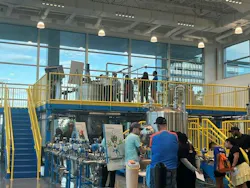
Between servings of chicken fingers and fries, middle schoolers were programming in Python, running 3D printers and talking robotics with industry engineers. It was a school night, but more than 200 students, parents and educators came anyway to learn about the possibilities and opportunities for future careers in process control and automation.
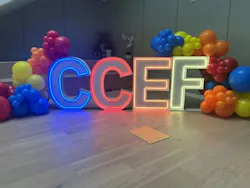
The 2nd Annual Community Career+Education Forum (CCEF), held Oct. 1, and was the first version held at the new campus that Endress+Hauser shares with its local channel partner, Eastern Controls, was a free, three-hour event aimed at middle school students and their parents, along with STEM teachers, guidance counselors and administrators. The students toured exhibits from local manufacturers, engineering and construction firms and colleges, and they got dinner, contests, prize challenges and door prizes.
The process automation industry needs technicians, engineers and tradespeople, and events like these are one way to put the industry in front of the very people who may one day fill those positions if they know about them.
A wide funnel
“This is the wide end of our funnel of talent,” said Nicole Otte, director of workforce development at Endress+Hauser. “These are future employees that could come into our company, or to our partner companies, to learn about if this is something they might want to do in their future career.”
Otte said the long game is already paying off. A college intern who had just accepted a full-time offer told her she had attended a CCEF event in middle school. “We have multiple stories like that,” Otte said.
She also pointed to a gap the event is meant to fill. Elementary science instruction is often squeezed by testing pressures on reading and math so industry-sponsored exposure matters. The Edgmont forum is also about four times the size of the first CCEF, held three years ago.
Awareness is the first barrier
For Dan McGrath, Eastern Controls’ workforce development specialist, the central challenge is awareness. A former teacher with 27 years in education, most of them teaching middle school social studies, McGrath joined Eastern Controls less than two months ago after building a workforce program at a traditional high school.
“From coming from the high school space, students are interested in trades,” McGrath said. “They all want to be carpenters, they want to be electricians, they want to weld. Process controls, instrumentation. They have no idea the industry and these jobs and careers exist.”
His approach is staged. Kindergarten through eighth grade is about interest, ninth and tenth grade about awareness, and juniors and seniors focus on immersion. In the final stage, students do hands-on work in labs built around a process training unit on site, with a full-time instructor.
McGrath said interest in process control is growing “but not quick enough.” Events like CCEF, he said, “will really help.”
He also described the labor picture in blunt terms. “Industry, there’s labor shortages. We can’t find enough technicians for our instrumentation. We can’t find enough engineers, inside and outside sales,” he said. “So, we need to develop that pipeline.”
Grants to teachers
One thing that sets CCEF apart is where some of the money goes. Exhibitor fees fund a STEM grant foundation, and teachers apply for grants to bring STEM into their own classrooms. At this year’s event, Eastern Controls and Endress+Hauser awarded roughly $4,000 in grants to four teachers, for an earthquake simulation table, a 3D printer, drones and a Lego-based engineering system.
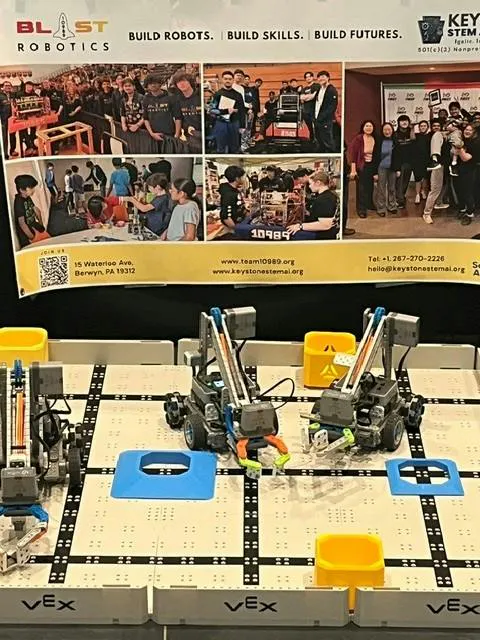
“It goes to teachers, not student scholarships,” McGrath said, “directly goes to building teachers in your classroom.” Because winners are likely to bring future classes back, he called it “part of that relationship building.”
Kevin Lavelle, general manager of Eastern Controls, said the grants went to schools at every level, and the money goes “right to the teachers for them to invest in that classroom.”
Not just another STEM night
Lavelle said the event’s mix of sponsors sets it apart. Exhibitors included food and beverage, life sciences, engineering and construction firms, as well as the contractor that built the Edgmont facility. “Our approach is to create a community that shares our vision,” he said. “If we do it by ourselves, we can make an impact, but if we really come together, we can really make a significant impact.”
Otte made the same point from the employer side. “It’s vital. We’re stronger together than we are separately,” she said. “If we can work together to create a future talent pipeline, then it benefits all of us, as opposed to competing for talent.”
The event also has a second audience: parents. “I think this event is just as much for the parents,” Lavelle said. “It’s for the parents to see that there’s opportunities, and there’s growth, and there can be different career trajectories for them.”
He stressed that the careers on display often don’t require a four-year degree. “There are great technical schools out here. There are other career options that are out there that don’t require a four-year degree.”
Lavelle added the sweet spot for engagement is middle school. “At a middle school age, which blows my mind,” he said, describing students programming in Python and working with 3D printers. “When they get to the point where they’re ready to enter the workforce, they are going to take us to a whole other level.”
Why it matters for process control
The first CCEF, in 2023, came just as the Covid-19 pandemic was ending and before construction began on the Edgmont building. For Lavelle, the broader stakes are tied to the future of manufacturing in the U.S. “We’re seeing more and more investment here in this area, and manufacturing, it’s really exciting right now, because it’s coming back to the United States,” he said. “You have to have the people to run those plants.”
Lavelle argued that industry must move first. “As an industry, as manufacturing, as end users, we need to be more proactive with the schools,” he said. “STEM is a buzzword, and people throw it out there, but let’s talk about jobs. Let’s talk about long-term, very good paying jobs.”
For an industry that has struggled to explain what a process automation career looks like, the Edgmont forum offers a fun way to show students, and their parents, just where the careers will be.
About the Author
 Len Vermillion
 Leaders Logo
Leaders relevant to this article: