Down and dirty digitalization
Key Highlights
- The Rosemount 396A features an anti-coating reference design and digital Modbus output, minimizing maintenance and ensuring steady signals in dirty, abrasive liquids.
- Its digital backend allows self-calibration, internal diagnostics and storage of failure logs.
- Enhanced sealing and ingress protection (IP67/IP68) enable reliable operation in wet, washdown and submerged environments for extended periods.
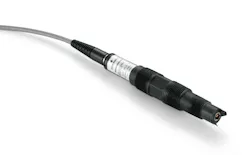
Some liquids contain so much dirt, viscous chemicals, abrasives, rocks, debris and other solids that they can barely be called as liquids at all. They beat up and destroy the pipes and pumps trying to transport them, so good luck to any sensor trying to gauge their contents and condition. Sounds like the perfect, filthy place for software and digital networking to finally come down from their pristine cloud and servers, get into some hardware, roll up their digitalized sleeves, and get some real work done.
The hardware in question is the newly released Rosemount 396A anti-coating, pH sensor for measuring pH and oxidation-reduction potential (ORP) in dirty, abrasive, and high-solids applications. It includes a robust anti-coating reference design and Modbus digital output for minimizing sensor maintenance, and ensuring steady pH/ORP signals, even when the sensor is coated or fouled by process buildup.
“We’re continuing to innovate and digitalize our liquids processing and analysis sensor line, building on the foundation we’ve established across the portfolio,” says Rachel Jang, product manager for digital sensors at Emerson. “With Rosemount 396A, we’re extending that progress to pH measurement and integrating it with Modbus protocol, which simplifies installation as well as communications.”
Rosemount 396A’s digital connectivity simplifies installation and speeds up sensor changeouts in challenging locations. It’s a drop-in replacement for legacy Rosemount 396P and 396PVP anti-coating sensors, enabling users to transition to digital technology without altering their existing installations or accessories.
Get your subscription to Control's tri-weekly newsletter.
“There’s lots of competition to digitalize sensors and other components lately because they’re easier to install, and can be dropped into place with one quick M12 port connection, instead of the seven to 10 loose lead wires that analog devices usually require. Digital cables also reduce errors due to EMI, ground loops and vibration, and they typically need less maintenance,” explains Jang. “Rosemount 396A has a digital backend with a circuit board inside an extended housing. Previous analog sensors had no board, so their transmitters had to do their calculations, and users also had to perform calibrations in a lab before taking them to the field, where they often had to be recalibrated. Rosemount 396A does its own calculations, and stores its calibrations and failure analysis logs on its internal sensor board. This means it doesn’t have to be tied to a transmitter, which provides added flexibility and diagnostic advantages.”
Beyond its anti-coating design, Rosemount 396A has improved sealing and ingress protection for protection against water and dust, including submersion in wet and washdown environments. It includes a through-wall reference junction with increased surface area at the junction for fouling applications. The sensor is IP67 and IP68 rated. IP67 means it can be submerged in 1 meter of water for 30 minutes, while IP68 means it can be submerged in 1 meter of water for 45 days.
Jang adds that Rosemount 396A has also undergone two or three months of field trials with users, and they’re confirming it’s easily installed, and that it’s working as well or better than their analog counterparts. “People are excited about the options that Rosemount 396A gives them,” adds Jang. “They also want to see other devices get digitalized in the future.”
