WirelessHART transmitter brings native wireless radar to level measurement
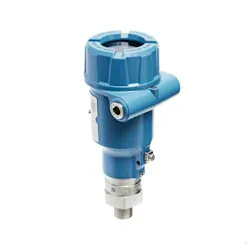
The Rosemount 3408 Wireless Level Transmitter is a native WirelessHART non-contacting radar level transmitter representing an advancement in level measurement technology. By eliminating the need for signal cabling, conduit installation and additional I/O infrastructure, wireless instruments provide a cost-effective means of collecting high-quality process data from even the most remote areas of a plant.
Wireless networks enable faster deployment, easier expansion of monitoring networks, and rapid, low-cost installation in hard-to-reach or previously unmonitored locations, often without interrupting operations. Both guided wave radar level transmitters and vibrating fork level switches have been available as fully wireless, self-powered instruments for many years. However, until the launch of the Rosemount 3408 Wireless, there had not been a native WirelessHART non-contacting radar level transmitter.
Unlike guided wave radar, which requires contact with the process medium, non-contacting radar offers greater flexibility in challenging applications such as those involving corrosive or sticky materials, high temperatures or strict hygiene standards. Whereas competing devices require external wireless adapters and separate batteries, the Rosemount 3408 Wireless is a fully self-contained unit. Its introduction is intended to fill what had previously been a significant gap in the range of available wireless level measurement options and broadens the scope of applications in which wireless level measurement is a practical and effective solution.
The primary obstacle to fully wireless non-contacting radar has been power consumption. Traditional frequency modulated continuous wave (FMCW) radar requires significant energy to generate and process signals, exceeding what battery-powered wireless transmitters could support. As a workaround, wired radar transmitters were often combined with THUM wireless adapters. This enabled wireless communication but still required external power, which limited installation flexibility as cabling constraints remained. This typically led to compromises in measurement frequency, coverage, accuracy or data quality, with operators relying on manual readings or limited data visibility, increasing the risk of inefficiency and unplanned downtime. The Rosemount 3408 Wireless addresses this limitation.
By combining highly efficient 80 GHz FMCW radar electronics with WirelessHART communication and long-life power modules, the transmitter provides a native wireless non-contacting radar solution, without the need for external adapters or power wiring. This development enables organizations to deploy non-contacting radar technology for accurate and reliable level measurement even in remote locations where access is challenging and installing power or signal cabling would previously have been prohibitively expensive or logistically impractical.
Typical applications include remote tank farms, chemical storage terminals and hazardous process areas.
The Rosemount 3408 Wireless can be easily integrated into any host monitoring and control system compliant with the HART protocol and the Field Device Integration standard, which digital transformation initiatives by enabling plant-wide visibility of previously inaccessible process data, resulting in improved operational performance and inventory management.
The transmitter features a diagnostics suite that provides actionable insights into device and process health, leading to long-term measurement reliability, reduced lifecycle costs, and enhanced operational efficiency and safety. Emerson’s proprietary diagnostic software, Smart Meter Verification, provides in-situ performance validation without interrupting the process, while Signal Quality Metrics delivers continuous, real-time assessment of radar signal quality and early alerts of abnormal conditions. In addition, on-board data historian functionality enhances operational insight, streamlines troubleshooting and supports proactive maintenance by continuously recording and storing key measurement and diagnostic data.