Modernizing process control with continuity
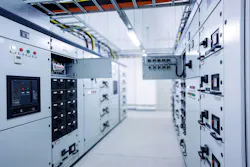
For many industrial plants, the distributed control system (DCS) has evolved alongside the operation for decades. Its control applications reflect years of engineering and process knowledge, while operators rely on familiar interfaces to keep production running safely and reliably. That accumulated investment remains valuable, even as parts of the automation infrastructure approach the limits of their supported service life.
Aging components, diminishing spare-parts availability and increasing maintenance requirements make modernization harder to postpone. At the same time, cyber security expectations are changing, experienced engineers are retiring, and plants need better access to operational data. Owners must address these pressures while managing the production impact, cost and risk of upgrading critical infrastructure.
The modernization decision is therefore about how to separate the parts of a control system that must evolve from the engineering knowledge, infrastructure and operational confidence that remain valuable. Treating these as a single decision risks discarding assets that still serve the plant.
ABB applies this approach through the SDe Series, a modular control and I/O portfolio designed to support phased evolution within existing installations. It applies the principle of innovation with continuity: preserving proven applications and usable infrastructure while modernizing the components that limit future performance. This represents a shift from modernization as a disruptive, one-time replacement project toward continuous innovation through planned, incremental upgrades.
SDe provides a modern control and I/O foundation that is seamlessly modernized over time. New plants can begin with SDe technology, establishing a control infrastructure with the latest digital features, and be ready for future enhancements and expansions from the start. Existing plants can introduce SDe progressively, addressing immediate lifecycle risks while preparing the system for future capabilities. Regardless of the application, SDe protects plant infrastructure investments with space-fit replacements, boosts plant efficiency and securely connects operations to a boarder digital environment with ABB Ability™ Symphony® Plus and ABB Ability™ System 800xA®.
Making modernization manageable
A complete DCS replacement can concentrate substantial work into a single shutdown. Beyond installing new controllers and I/O, the project may involve replacing cabinets, reconnecting field wiring, migrating control applications and rebuilding operator graphics.
Testing and commissioning must then establish that the new system performs as required before production resumes. Depending on the scope, outages can extend for weeks or months, increasing production losses and the safety exposure associated with extensive installation work and plant restart.
For utilities and continuous-process facilities, this creates a difficult investment decision. The long-term benefits of modernization must be weighed against lost production, execution risk, future operational uncertainty, and the resources needed to complete the transition.
Concentrating expenditure and engineering resources into one major project also complicates capital planning. This is the “rip-and-replace” trap: the scale and disruption of a complete replacement can discourage investment even as the need to modernize grows. Where the existing system still performs adequately, postponement can appear easier to justify.
However, continued operation does not necessarily mean continued supportability. Replacement components can become harder to source, maintenance costs can rise, and knowledge of proprietary technologies can leave with retiring personnel.
Remaining on outdated, unsupported technology can also increase exposure to cyber security threats and make evolving compliance requirements harder to address. Emergency repairs, specialist maintenance and unplanned downtime can progressively raise operating costs and total cost of ownership. A failure may eventually force an upgrade on a schedule dictated by circumstances rather than the plant’s priorities.
A phased approach gives owners greater control over that schedule. Modernization can be divided into defined steps aligned with maintenance windows, capital budgets and the condition of installed equipment. Each stage addresses an identified need while contributing to a longer-term evolution plan.
Preserving what continues to deliver value
The starting point is understanding which parts of the installation require modernization and which can remain in service. Controllers, I/O modules, power supplies and cabinet infrastructure do not necessarily need replacement at the same time. Their condition, support status and previous upgrade history should inform the sequence. The objective is not to preserve old infrastructure for its own sake, but to retain what still delivers value and replace what constrains reliability, supportability or future performance.
SDe supports this approach through space-fit hardware designed for incremental upgrades within existing infrastructure. Field wiring, termination units and module cabling can be retained, alongside cabinets and other usable components. This reduces the amount of physical work involved and limits the disruption associated with extensive rewiring.
Preserving infrastructure also protects engineering investment. Existing control applications and the human-machine interface (HMI) can be retained, helping maintain operator familiarity and avoiding unnecessary redevelopment and retraining. The plant can introduce current control technology while carrying forward the process knowledge embedded in its automation system.
Infrastructure reuse also makes environmental performance part of the modernization decision. Retaining serviceable cabinets, wiring and termination units reduces hardware waste and avoids the material use associated with unnecessary replacements. More efficient control and I/O hardware can also reduce power consumption compared with previous generations, improving energy efficiency during operation. In doing this, modernization becomes a targeted engineering exercise guided by operational value and lifecycle requirements.
A practical path for established systems
SDe Series provides an evolution path for the SD Series, Harmony Rack Series, INFI 90® and Network 90® installed base. Compatibility with previous generations allows owners to modernize controllers and I/O in manageable steps. For these established systems, the approach supports a long-term evolution path by progressively introducing current, supported technology while preserving usable infrastructure.
SDe brings the same core control technology across different deployment options, allowing modernization to be adapted to the needs of the existing installation. Whether the priority is replacing individual modules, progressively evolving controllers and I/O, or supporting system expansion, this flexibility helps plants align the scope of each upgrade with operational requirements and planned maintenance windows.
Controller and I/O evolution can also be sequenced separately. A plant may prioritize selected controllers before moving on to I/O, rather than treating the entire subsystem as one replacement project. The work can be organized around specific cabinets or plant areas, with cutovers aligned to operational schedules.
Preserving wiring and module cabling reduces the need to disconnect and reconnect field signals, helping shorten cutover work and reduce opportunities for wiring errors. Verification and commissioning remain part of the project, with their scope determined by the changes being made.
For owners of rack-based systems, this provides a continuing path for the installed architecture. Moving to current technology does not automatically require abandoning the rack infrastructure on which the plant has built its control system.
Modern connectivity as part of evolution
Hardware modernization also creates an opportunity to simplify the communications architecture. SDe introduces a modern Ethernet backbone, enabling plants to move away from proprietary communications arrangements as the system evolves.
A flatter, network-centric architecture can reduce reliance on dedicated communications modules and bridges. Industry-standard Ethernet also supports the use of standard tools for network diagnostics and maintenance, helping engineers manage the system using more widely available skills and technologies.
This evolution also supports workforce development. Current engineering environments and more intuitive tools can help newer engineers configure, diagnose and maintain systems more efficiently. Combined with the retention of proven control applications, they allow teams to preserve established process knowledge while reducing dependence on specialist expertise in legacy technologies.
These changes matter beyond the immediate upgrade. Modern connectivity provides a stronger basis for integrating field devices, process and electrical systems, and wider enterprise applications. It prepares the control infrastructure for capabilities that can be introduced as operational requirements develop.
A current, supported control system also provides a stronger foundation for addressing evolving cyber security requirements. That foundation must be maintained through lifecycle planning and appropriate security practices as connectivity and application use expand.
Preparing for capabilities beyond control modernization
Control and I/O modernization is also part of a broader evolution journey. ABB’s Automation Extended approach builds on the separation of control and digital environments, allowing digital capabilities to develop at a pace suited to their purpose without imposing the same lifecycle on process control. Plants can therefore address immediate priorities such as supportability and reliability while creating a foundation for capabilities that may be introduced as operational needs evolve.
Planning for continued evolution
The industry needs to move beyond treating modernization as a choice between keeping an aging system and replacing it entirely. Control applications, hardware and digital capabilities have different lifecycles; forcing them onto a single replacement schedule risks discarding operational value or delaying necessary change. A stronger strategy distinguishes what must evolve now from what remains fit for purpose.
For plant owners, this means judging each investment against three questions: which risks does it address, which capabilities does it enable, and how does it support the next stage of evolution? Retaining infrastructure is justified where it continues to deliver value, not simply because it is already installed. Equally, replacement should address a clear operational need rather than become an objective in itself.
Modernization should therefore be measured not by how much equipment is replaced, but by how effectively it reduces lifecycle risk, preserves process knowledge and creates room for future capabilities. Continuity and innovation are not competing priorities. A credible automation strategy must deliver both.
To learn more, visit: SDe Series webpage and Automation Extended.
About the Author



 Leaders Logo
Leaders relevant to this article: