Process control coordinates always-on sustainability
Key Highlights
- Process control and automation directly impact facility efficiency, leading to reductions in energy consumption, raw materials and emissions.
- Modernizing control platforms like DCS, PLC and HMI improves visibility and enables continuous operational improvements.
- Successful sustainability initiatives require cross-functional collaboration among operations, engineering, maintenance and safety teams.
History, increasingly slippery icecaps, slowing ocean currents, and worsening hurricanes, wildfires and heatwaves will judge which, if any, sustainability efforts contribute to better long-term outcomes, including much of humanity’s survival. Of course, just like voting and other small endeavors, every little bit helps. Because each piece may be the one that ensures victory, it’s crucial to make certain none fall through the cracks, and that all get used
“Process control and automation are some of the most practical ways to improve sustainability because they directly affect how efficiently facilities run every hour of every day,” says Heath Stephens, PE, digitalization leader at Hargrove Controls & Automation in Mobile, Ala., a division of Hargrove Engineers & Constructors, and a certified member of the Control System Integrators Association (CSIA). “Better control strategies can improve utility consumption, optimize batch or continuous processes, and help operators respond faster to changing process conditions.
“Modernizing DCS, PLC and HMI platforms creates better visibility into energy-intensive assets and makes continuous improvement more achievable. Meaningful reductions in energy use, raw materials and emissions usually come from cumulative, small operational improvements rather than one large initiative. These capabilities support a practical sustainability approach—use data to identify losses, automate responses where appropriate, and make operations more predictable, efficient and resilient.”
Coordinate, cohere and conserve
Because its businesses include an engineering, procurement contractor (EPC), system integrator and operations, Stephens reports that Hargrove can provide more cohesive solutions, especially in hydrogen, clean fuels, electrification, renewable power integration and energy storage applications.
“Success in these industries depends not only on process design, but also on safe control architectures, reliable instrumentation, utility integration, and effective commissioning,” says Stephens. We’ve been particularly active in the solar/battery energy storage system (BESS), hydro and renewable fuels applications.”
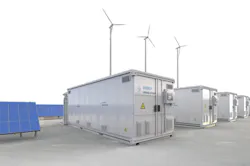
For example, one of Hargrove’s energy clients wanted to supplement its traditional power generation during peak consumption hours after sundown. It developed programming to safely collect excess energy from the client’s solar fields, and store it using BESS at several sites. Stored power could then be transferred to the local specified, safe discharge rates. This project conducted virtualized factory acceptance testing (FAT) with simulated code, onsite site acceptance testing (SAT), remote commissioning of Ignition SCADA software, and data collection by KEPServerEX software at each site.
Get your subscription to Control's tri-weekly newsletter.
“Collaborating with third-party vendors helped create custom workarounds for equipment irregularities, monitor intake and output of energy to ensure rates were consistent with equipment specifications, and remotely monitor installations, while implementing any requested changes,” explains Stephens. “These changes ranged from PLC control to SCADA control to data collection. These sites were implemented with automated scheduling algorithms that require minimal remote operator intervention. Once the project was complete, its users could maintain a more consistent demand curve of their traditional, power-generation methods.”
Think of green as a process variable
Stephens adds Hargrove would recommend treating sustainability in the same way as safety, quality, and production goals—define them clearly, measure them consistently, and connect them to day-to-day operating decisions.
“Companies are most successful when they begin with a practical baseline of current performance, identify their biggest sources of energy loss or emissions, and prioritize projects that offer operational and environmental value,” adds Stephens. “Controls and automation improvements are often a strong starting point because they can generate measurable gains often with little or no capital investment. Other improvements may require investment in new equipment or other engineering solutions. Another important lesson is that sustainability efforts should be cross-functional. Operations, engineering, maintenance, EHS, electrical, instrumentation and controls teams all need to be aligned, so solutions are technically sound and supportable over time. Fortunately, since most sustainability projects and programs result in reduced expenses or higher efficiency, they often have an attractive financial payback in addition to their social/environmental impact.”
This is part three of Control's July 2026 sustainability feature. Read the other installments here.
About the Author
 Jim Montague
 Leaders Logo
Leaders relevant to this article: