Top-shelf, cost-effective flame detection
Key Highlights
- Utilizes QuadSense technology with four infrared sensors for highly reliable hydrocarbon flame detection and nuisance alarm reduction.
- Factory-calibrated for life, eliminating the need for field calibration and reducing maintenance costs.
- Capable of detecting flames up to 150 feet (45 meters) with response times under five seconds.
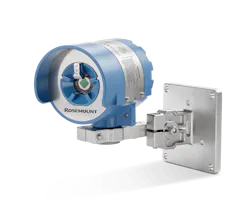
Industrial facilities need flame detection that can respond quickly and reliably without creating frequent nuisance alarms, but not every application requires a top-tier system at a top-tier price. Emerson’s Rosemount 965 flame detector is designed to offer advanced hydrocarbon flame detection, dependable performance and flexible deployment options in a more cost-effective package.
Emerson is expanding its flame detection portfolio with Rosemount 965, a reliable hydrocarbon flame detection solution for non-hazardous locations, with a flameproof model certified for hazardous-location applications. It incorporates QuadSense technology introduced in 2021, factory-calibrated-for-life operation, broad integration options and rugged enclosure protection to support fire-protection strategies tailored to individual application requirements.
“Rosemount 965 retains the premium-tier technology of its counterpart, but it’s more cost effective,” says Evgeny Rivkin, product manager for flame detection at Emerson. “This is not a conventional detector. It’s a smart detector with a built-in algorithm that can discriminate actual thermal radiation from background heat sources like ambient solar radiation and heating equipment.”
QuadSense technology relies on four infrared sensors to help distinguish hydrocarbon fires from non-flame radiation, which enables more reliable detection, and minimizes nuisance alarms that can be annoyingly frequent in many locations. Under specified conditions, Rosemount 965 can detect hydrocarbon fires at up to 150 feet (45 meters) and usually responds in less than five seconds. Five selectable sensitivity levels help users align its performance with their needs.
"In Rosemount 965, QuadSense uses two channels, each with two infrared sensors, which are tuned to specific radiation waveforms and measure their peaks to identify genuine flame profiles,” explains Rivkin. “The two channels act like two Triple-IR detectors, and the adaptive algorithm combines the two channels into one certain decision, which is much more reliable than traditional methods. It’s immune to false alarms.”
Rivkin reports that QuadSense technology also lets Rosemount 965 see and identify fires in harsh environments, including fog and rain, while still discerning false alarms. It’s also solar blind, so it’s not affected by sunlight, and can likewise tell the difference between a flame and lightning, which earlier flame detectors had tried to achieve for a decade.
Rosemount 965 uses its built-in optical sensor and Built-In Test (BIT) diagnostic to monitor for lens contamination, optical obstructions or internal hardware failure, helping verify the detector is not “blind” and indicating when the lens likely needs cleaning.
Get your subscription to Control's tri-weekly newsletter.
In addition, Rosemount 965 is factory-calibrated for life, so no field calibration is required. Built-in, infrared test capabilities continuously verify optics and electronics integrity, maintaining confidence between manual inspections. Multiple output options, including HART connectivity, support integration with standard communication infrastructures, while universal wiring helps simplify specifications and streamlines plantwide deployments. Its IP66 and IP68 enclosure protection further supports its performance in demanding environments.
“Automated, lifetime, factory-based calibration means users don’t have to worry about Rosemount 965’s performance,” adds Rivkin. “It’s designed for users, who don’t need as many bells and whistles, but need and would benefit from industry-standard flame detection that they couldn’t always afford previously.”
While its new flameproof model can serve in oil and gas, chemical and petrochemical facilities, storage tanks and hazardous materials areas, and explosives or munitions sites, Rosemount 965 also supports non-hazardous. light-industrial applications, such as transportation hubs, public buildings, cable tunnels, semiconductor plants, warehouses and other sites, where dependable hydrocarbon flame detection is needed. Rosemount 965 is available with an aluminum body for these lighter applications.
Rivkin adds that Rosemount 965’s other accessories include:
- A flame simulator,
- Pole-mount option for field deployment,
- Air shield for connecting to air-pressure devices, which can help clean its lens, and
- USB adapter for communicating with laptop PCs, as well as accessing Modbus networks to adjust settings, access its internal event logs, and easily pull raw data if and when a fire is detected.
For more information, visit www.emerson.com/Rosemount965
