How Tianxin Pharmaceutical rebuilt its plant around Ethernet APL and HART-IP
Key Highlights
- Ethernet-APL reduced control-room cabinet space from about 200 m2 to 15 m2 and eliminated nearly 400 km of cabling.
- Tianxin reports commissioning schedules shortened by three to five months and process changes completed in one or two days.
- Tianxin estimates savings of ¥3.88 million at Leping and ¥16 million at Ningxia.
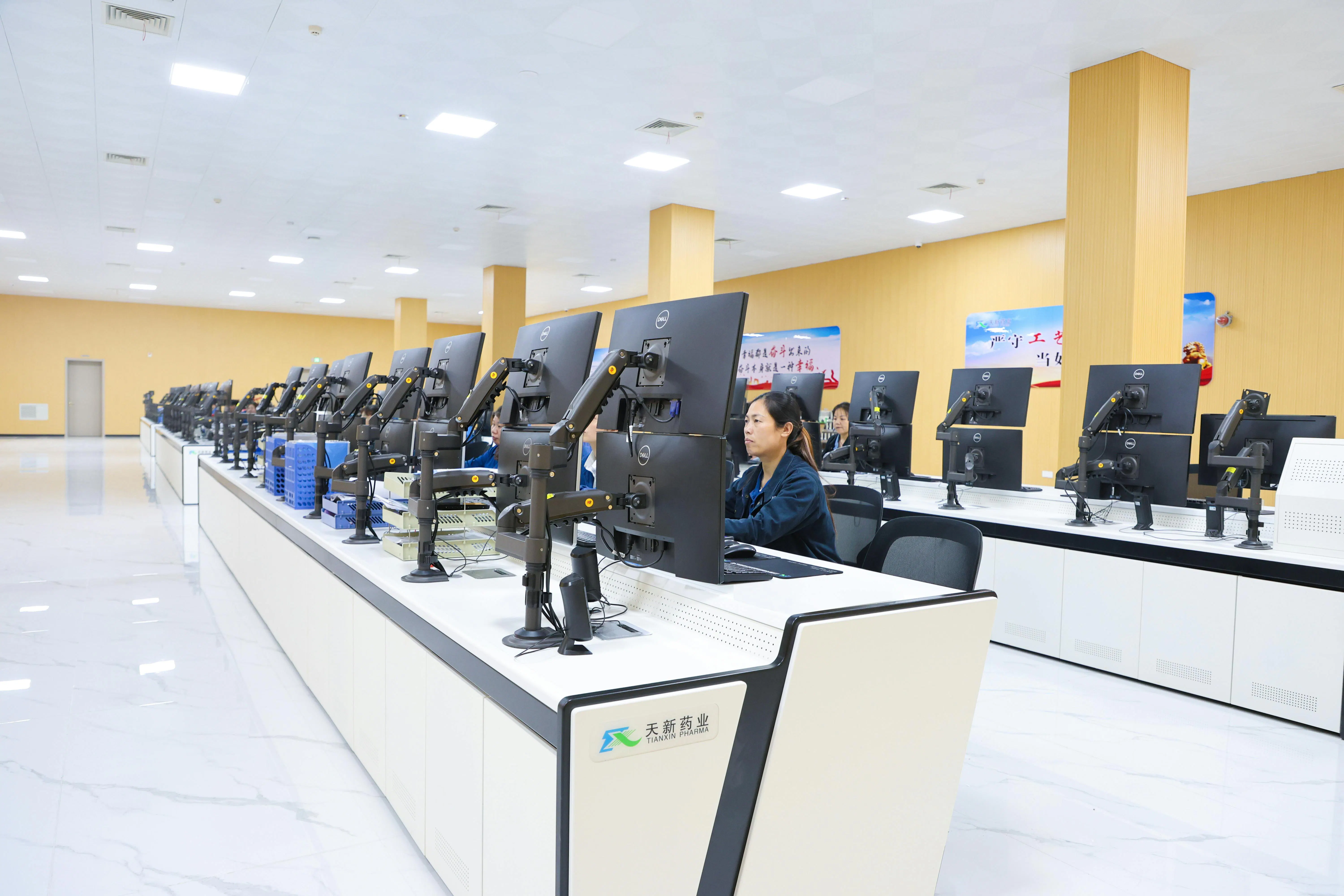
In the central control room at Tianxin Pharmaceutical’s Jiangxi Leping Factory, the raised floor tells the story. The room was laid out for a traditional distributed control system (DCS), with space for 70 cabinets of I/O hardware. Today it holds five, cutting control-room cabinet space from about 200 m2 to 15 m2.
The dramatic reduction is one of the most visible results of Tianxin’s decision to use Ethernet-APL as the physical-layer backbone for its intelligent field instrumentation.

“Ethernet-APL delivers significant advantages in safety, space efficiency and long-term scalability while simplifying traditional field wiring and supporting future plant expansion and digitalization,” said Mr. Tang Yong, deputy chief engineer of Tianxin Pharmaceutical.
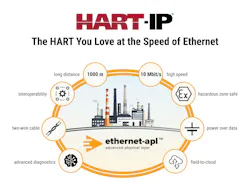
The two-wire, high-speed data architecture carries power and digital communications using Ethernet technology. It was delivered with DCS supplier Supcon and rests on HART-IP instrumentation. The automation protocol gave the plant a practical migration path to the Ethernet-APL physical layer while allowing operators and suppliers to keep using familiar HART knowledge, tools and workflows. Together, the infrastructure savings of Ethernet-APL and the continuity of HART-IP created the modernization strategy that helped earn Tianxin FieldComm Group’s 2026 Plant of the Year recognition.
A global vitamin powerhouse
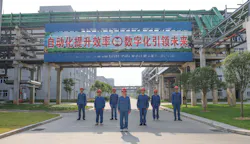
Tianxin Pharmaceutical was established in 2004. It makes vitamin B6, vitamin B1, folic acid, biotin and vitamin D3 for use as active pharmaceutical ingredients and in food and feed additives. The company employs more than 2,400 people, with production bases in Leping, Jiangxi province, Qingtongxia, Ningxia province, and R&D and sales centers in Shanghai.
Its production scale gives the modernization project added significance. Tianxin reports that its vitamin B1 and B6 products account for more than half of the global market.
Its mission is to pioneer the future of nutrition through innovation and integrity; a theme reflected in the way the company has approached plant modernization.
The Leping site covers more than 8 million square feet (787,424 square meters), divided into multiple sections. Section 4, where Ethernet-APL is deployed includes 15 main production workshops and more than 40,000 signal points. More than 12,000 are Ethernet-APL intelligent instruments. The rest are largely discrete on/off signals typical of fine-chemical processing, which are using special designed digital I/O modules built on Ethernet-APL as well.
Why Ethernet-APL? A strategic approach to plant modernization
For Tianxin Pharmaceutical, Ethernet-APL offered a practical way to meet evolving safety requirements, simplify field infrastructure and improve access to digital information while preparing for future expansion. New safety requirements in China meant centralized control rooms needed to be located farther from production workshops. Ethernet-APL addressed the resulting connectivity challenges by carrying power and high-speed Ethernet communications over two wires. Its trunk-and-spur architecture allows compact, trunk-powered field switches to be installed closer to instruments, reducing wiring and the need for separate local power supplies and large instrumentation cabinets.
Commissioning has become more efficient as well. Automatic IP addressing simplifies device setup, while digital communication reduces some of the signal verification and testing associated with conventional analog loops. Tianxin estimates that these efficiencies have shortened commissioning schedules by three to five months, bringing new pharmaceutical production capacity online sooner and accelerating time to market.
Flexibility was another consideration, as pharmaceutical production evolves with new products and process improvements. Tianxin wanted an architecture that could adapt to these changes while providing greater access to diagnostic information from intelligent field devices. Additional field switches and instruments can be connected along existing trunks without extensive rewiring or redesign, while compact field switches reduce the need to reserve cabinet space for future expansion.
As Tang explained, “If we want to add some new signals, we just add a new APL field switch and connect it into the existing Ethernet-APL trunk.”
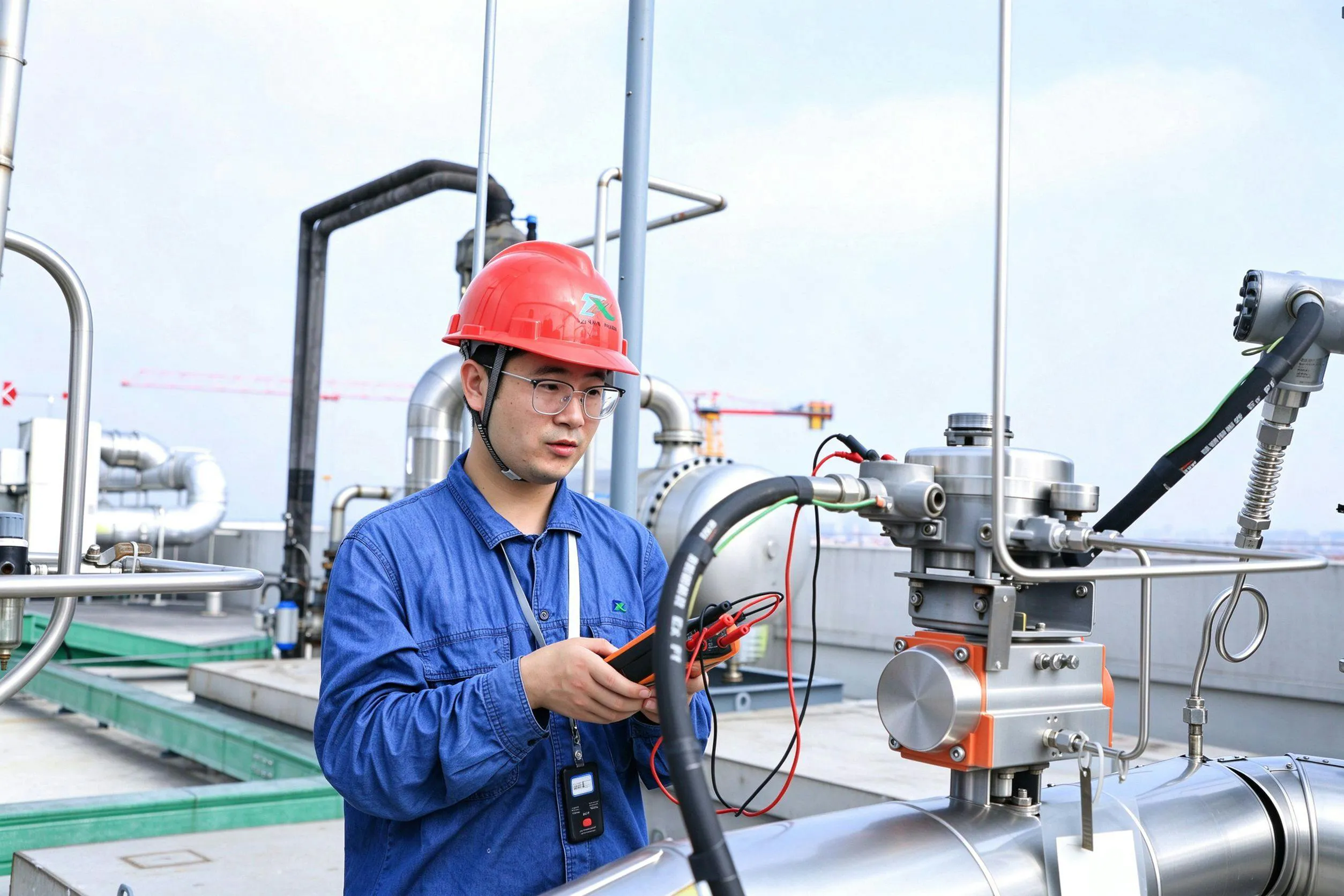
Combined with software-configurable signals, this flexibility allows some process modifications to be completed in just one or two days. Redundant trunk connections also help maintain communications if one fails, reducing the risk of operational disruption. Intrinsic safety provides another operational advantage. Ethernet-APL’s intrinsically safe spurs support live maintenance under appropriate safety procedures, particularly important where approximately 20% of Tianxin’s field devices operate in Zone 1 hazardous areas.
The architecture also proved adaptable to both brownfield and greenfield. At Jiangxi, Tianxin expanded operations and upgraded existing installations, reusing suitable field cabling where practical while minimizing disruption to production. Experience gained through those projects informed its greenfield Ningxia facility, where Ethernet-APL was incorporated into the original design. With no existing field infrastructure to accommodate, Tianxin could optimize control-room space, reduce cabinet and hardware requirements, and simplify installation and commissioning from the outset.
The HART advantage
For Tianxin, moving Ethernet to the field did not mean leaving behind what its operators already knew. Ethernet-APL provided the physical layer; HART-IP provided continuity with the HART environment the plant already understood.
“The HART-IP over APL architecture ensures seamless integration with existing infrastructure, bridging the gap between traditional analog systems and modern digital networks,” Tang said.
Existing control and intelligent device-management platforms could adapt largely through software instead of wholesale hardware replacement. Operators could keep familiar handhelds, device descriptions and workflows, reducing retraining and simplifying troubleshooting. Device suppliers could reuse HART knowledge and designs as they developed APL products.
Commissioning changed as well. On a conventional loop, technicians calibrate, verify 4–20 mA signals and check range values. With digital signals, much of that point-to-point work falls away.
Get your subscription to Control's tri-weekly newsletter.
Start small, then scale
Tianxin did not make the move all at once. Its approach was measured: test the technology at small scale, understand the operational impact, and expand after the plant gained confidence.
In early 2023, Tianxin began with a small group of transmitters. The pilot showed the team that APL could reduce long cable runs and installation costs while providing considerably more field information than a single analog signal.
In the second half of 2023, the company expanded Ethernet-APL to the Lactone and B5 production workshops. From 2024 to 2025, it moved to full-scale deployment in Section 4. In 2025, the approach was replicated at the Ningxia factory. In the second half of 2026, Tianxin began upgrading existing systems at Jiangxi Leping factory, extending the strategy from greenfield projects into brownfield modernization.
Building the architecture and ecosystem
As deployment expanded, Tianxin worked with its DCS provider, Supcon, to build the APL infrastructure. The architecture includes redundant power switches with eight trunk ports, field switches with 12 spur ports and digital signal transmitters for DO/DI signals such as digital valves. APL trunks support distances up to 1,000 meters, so power switches can be placed in the field or control room based on plant layout.
Tianxin reports approximately 12,000 HART-IP devices at Jiangxi. About 60% are supplied by Supcon and roughly 40% by other manufacturers. Many third-party devices use Supcon’s APL/HART-IP module, while others use their own implementations.
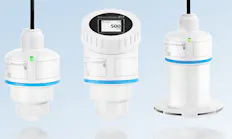
Supcon’s module combines the APL hardware interface, power-decoupling circuitry and HART-IP stack, helping manufacturers bring existing HART designs onto APL while reusing HART application layers and DDs. As native HART-IP over APL devices become available, they can connect directly to the same APL infrastructure. More than 30 APL devices have been developed, and Supcon’s Ethernet-APL Ecosystem & Partnership Program now includes more than 70 partners. The result is a network strategy that can support module-based devices today and native HART-IP over APL devices as the supplier ecosystem grows.
The multi-vendor mix matters because no single supplier can cover every measurement requirement. It allows Tianxin to standardize the field network while selecting instruments for the application.
Before and after
The results are measurable:
- Control-room footprint: 70 cabinets, about 200 m2, down to five cabinets and about 15 m2
- Cabling: nearly 400 km eliminated and cable-tray space reduced about 80%
- Faster commissioning: 10 months in commissioning now, reduced 3~5 months compared with previous.
- Process changes: modifications or signal expansions take one to two days
- Data: 30%+ richer real-time data from multivariable instruments
Tianxin estimates total savings of ¥3.88 million, about US$566,000, at Leping and ¥16 million, about US$2.3 million, at Ningxia from reductions in cabling, tray, installation, cabinet and I/O requirements.
“These results prove APL is not just a technological upgrade but a high-return investment, delivering measurable cost benefits across different industrial scales and solidifying its role in smart manufacturing transformation,” Tang said.
What’s next
Tianxin plans to bring intelligent device management (IDM) system closer to the field network so device-management traffic can communicate directly with devices rather than pass through the controller as working now. The move is intended to expand access to diagnostics and device information and make greater & faster use of the digital foundation already in place. HART-IP supports multiclients so it only needs to connect the IDM with the existing field devices as a new HART-IP client, no new hardware required. Ethernet-APL has moved from pilot to large-scale deployment, cross-regional replication and brownfield modernization. By building on the HART foundation its workforce and suppliers already knew, Tianxin has created an Ethernet-based field architecture that protects existing investment, expands access to device data and gives the plant room to incorporate a growing multi-vendor HART-IP ecosystem. In that sense, the project puts Tianxin’s mission of innovation and integrity into practice on the plant floor.
About the Author
 Len Vermillion



 Leaders Logo
Leaders relevant to this article: