Chevron rebuilds operator competency with new OTS program
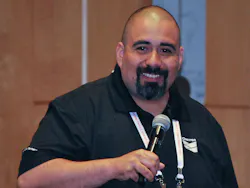
"I think the biggest obstacle I had was telling ourselves that we failed,” said Israel Leon, console training specialist at Chevron’s Richmond facility. His presentation at the 2026 Honeywell User Group conference in Phoenix, detailed the company’s new operator training simulator (OTS) program.
Once regarded as the flagship site for operator simulators, Chevron’s Richmond facility had reached a point where its training systems frequently crashed, operator engagement had fallen below 20%, and instead, board operators mostly had to learn by waiting for something to happen on a live console.
The Evergreen project, a four-year effort with Honeywell to rebuild its simulator infrastructure and establish a formal competency program, improved operator confidence and accelerated their qualification.
From flagship program to failing system
"When I first started as the console training specialist, our simulators were far behind," Leon said. "They barely worked. Occasionally, you’d get one to run, and if you did, it only lasted for an hour, tops."
It was a far cry from Richmond's earlier reputation. "We had people from all around the world fly to Richmond to train on our simulators. Over time, we lost support. The accuracy started to slip, and they started getting used less and less," Leon said.
Aging simulation models became increasingly difficult to maintain. "They constantly crashed. The default was training on the live console, and if anyone's ever done that, it gets very expensive, very fast."
The reliance on live operations for training also had significant limitations. "Basically, the operators would sit around on the console and wait for something to happen," Leon said. "It's not a very effective training model."
Prior to the new OTS, the Richmond facility averaged approximately 1,600 simulator training hours annually across 12 different models. New operators often completed their training with little exposure to abnormal situations or critical decision-making scenarios. "It left our new board operators with little to no confidence,” Leon said. “Everything is trained in theory, so they had slow decision-making.” Startups were often delayed, waiting for the properly trained board operator to be on shift.
The refinery also lacked any structured way to measure operator readiness. "Competency tracking was non-existent," Leon said. "We had no idea where we stood."
During plant upsets, the lack of training really showed. "Recovery times were drawn out, so every time we had an upset, it took a lot longer to recover," Leon said.
The business case for workforce competency
Leon recognized that justifying a new training model would require demonstrating financial value. "I went back and looked at all the incidents that we had with board operators and looked at what it was costing us from all these mistakes,” Leon said.
All those mistakes cost 22 times more than the cost to build the new system. Leon did further analysis, which reinforced the connection between training quality and operational performance. Root cause analysis of the mistakes showed 87% were caused by lack of training.
With a clear business case established, Chevron chose to work with Honeywell to rebuild the simulators and build a training program around the refinery’s needs. Leon also wanted a way to quantify competency development for operators.
The resulting workforce competency project, nicknamed Evergreen, started four years ago and focused on both technology modernization and training methodology. "We spend roughly two to three months rebuilding our simulators, and from there it's maintaining," Leon said. "We're also adding two new models every year.”
Leon said one of the best aspects of the program was they had zero downtime as they transitioned to new models. "No interruption in training, no new hard new system to learn," Leon said.
Equally important was maintaining alignment with the live operating environment. "Everything is regularly updated, so it's constantly accurate, mimicking the real live plants," he said.
Every six months, the training team reviews management of change (MOC) documentation and compares simulator configurations against actual operations. "We'll come up with a health report and see what needs to be added to the new simulators," Leon explained.
Measurable improvement in operator readiness
The outcomes have been impressive for Chevron’s Richmond facility. The first year of the project, they were at 1,600 simulator hours annually, and now they’re up to 5,500 hours.
"Before, less than 20% of the operators were using the system," Leon said. "Right now, 100% of the new board operators go through simulator training before they get on the actual console."
Experienced personnel also participate. "All the senior operators come back through simulators every three years for training," he added.
The facility experienced dramatic improvement for qualification timelines of new operators. Previously, new board operators needed three to six months to feel “okay” on the new console, Leon said. "We've gotten that down to 28 shifts, and they're ready to run," he added.
One of the biggest benefits of the training simulators, Leon said, was improved startup, shutdown and planned events. A few days prior to the event, board operators run through the startup to shutdown of the plant on the simulator. "That process has improved our startups easily by two or three days," Leon added.
Perhaps most importantly, operators approach the console differently. Operator confidence level after simulator training “has been huge," Leon said. "They're no longer scared to make moves on the board."
For Leon, the project also challenged long-standing assumptions about how operator development should occur. "There's a saying: We've always done it that way. And every time I hear it, I just cringe," he said. "I think it's one of the most dangerous sayings in this industry." Leon thinks it’s the wrong frame of mind for industry, which should be open to trying new things. "Just because we did it, doesn't mean it was right," Leon added. "So I'm down to try something new."
The Richmond facility will continue expanding simulator access with new simulators and additional scenarios. "Right now, we're not done," he said. "I want to get more simulators out there, more people on them."