Honeywell AI pilot aids coker unit operations at TotalEnergies refinery
Can AI really be useful in process control and automation applications? That’s the big question every developer, user, system integrator and supplier is trying to answer lately.
Well, at least one ballot is now in, and the answer appears to be yes—with a few caveats and added tasks. TotalEnergies recently implemented an Experion Operations Assistant pilot project on the delayed coker unit (DCU) and control room at its refinery in Port Arthur, Texas. It typically processes 238,000 bpd of complex crude in its 47 process units, and DCU and fluid catalytic cracking (FCC) conversion units.
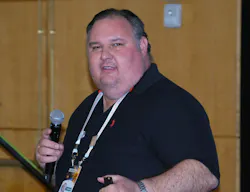
“I don’t do AI. I do process control engineering. So, starting to work with AI’s large-language models (LLMs) was new to me,” said Thomas Klein, process control professional at Total’s Port Arthur facility, who presented its AI project on the second day of Honeywell User Group Americas 2026 in Phoenix this week.
Where and how to apply AI?
To investigate how AI and machine learning (ML) might enable its processes, TotalEnergies partnered with Honeywell, launching its pilot in October 2024. This joint development allowed TotalEnergies to implement and learn about AI-based operations, and develop several possible use cases (UC) where AI could likely be deployed in its production environments, including:
- Steam disturbance prediction, which started in May 2025, and closed a year later;
- Drum cycling and spalling, which both started in July 2025; and,
- Alarm guidance, which started in January 2026.
“The steam disturbance UC was the first time at our site that AI detected a situation it had predicted,” added Klein.
These UCs also helped TotalEnergies decide where to deploy AI first at its Port Arthur refinery. This turned out to be the coker unit and its console operations based on the challenges they typically present, and how AI might be able to help. DCUs typically use high heat to thermally crack heavy, residual oil into lighter, more valuable products, such as coker naphtha and gas oil. These challenges include:
- Occasional disruptions to boilers and other steam-generating systems;
- Pressure dips caused by the disturbances, which lead to compressor trips, resulting in plant shutdowns, flaring and other disruptions;
- Increased operating costs; and,
- Limited time to make informed, steam-shedding decisions for non-critical equipment.
“We decided to do AI on the coker unit first because it’s a continuous batch process with console-based operating decisions in real-time, and it has some constraints like scheduling and other common challenges that AI could help address, such as giving operators more data ahead of time, so they could act sooner in response to changes like pressure drops,” explained Klein.
Klein reported the scope of Total’s pilot project for implementing Experion Operations Assistant included predictive alerts for steam disturbances, spalling events and drum filling, as well as alarm decision support for board operators. To perform the tasks needed to accomplish these goals, Experion Operations Assistant employs its Experion Python Module and enhanced alarm decision support and integrates them with Total’s HALO Lookahead Runway. Its expected results included fewer flaring events, increased availability and performance of the coker plant, and the ability to respond faster and more accurately to alarms.
More specifically, once Experion Operations Assistant was up and running in the Port Arthur refinery’s DCU, it quickly made progress on the pilot project’s four primary goals:
Steam perturbance prediction
Continuous high-pressure steam is critical for turbine operations, but steam shortages in elevated, overhead pressure lines increase the possibility of flaring. Experion Operations Assistant integrated AI and ML models were able to predict pressure dips 10-18 minutes earlier than before, and enable more proactive operator responses to mitigate them.
“The initial model implementation delivered reasonable accuracy with limited lead time, while feature engineering added volatility, rate, threshold distance, and acceleration to the model, which also improved performance,” explained Klein. “Accuracy also increased by 85% along with that approximately 18-minute average gain in prediction lead time. So far, our operators have acted on at least two AI-based alerts since the model was implemented, which validated its real-time useability. Our operators have recognized this solution as a valuable decision-support tool for managing steam disturbances. Having a real-world AI product that can say ‘here’s what’s coming’ is a pretty big deal for them.”
Drum cycling prediction
Likewise, Experion Operations Assistant calculates and displays drum status, out-of-sync warnings and delay decoking alerts for HALO. In this case, the resulting predictions provide advisory input to operations, along with existing process data and operating cues. Klein reported that one challenge is using these predictions to support longer-term planning, as well as highlighting near-term transition issues. The predictions’ greatest value occurs when drum cycles are tight and switch flexibility is limited.
“The drum-level prediction model achieved 75% prediction accuracy, but drum switching also depends on conditions beyond the model’s scope, so this use case wasn’t retained,” added Klein.
Heater spalling prediction
Because heater-tube coking can reduce heater efficiency, periodic spalling is essential, and this often requires manual coordination and forward-looking planning to minimize production impacts. In this situation, Experion Operations Assistant provides early indications of coke buildup and advisory guidance on spalling timing. These predictions also support operator readiness and maintenance planning, especially when time and flexibility are limited.
“The multivariate model for heater spalling delivered reliable spalling indications with improved accuracy. In fact, it achieved about 75% prediction accuracy with two-hour updates over a typical 28- to 30-day cycle,” said Klein. “Its outputs also closely matched operator experiences and key process adjustments. Meeting operators' expectations is very hard, so this gives the model a strong potential for improving spalling scheduling and throughput.”
Enhanced alarm decision support
As always, high alarm volumes and limited operator experience can hinder timely situation recognition and responses. To alleviate these persistent problems, TotalEnergies worked with Honeywell to develop an Enhanced Alarm Decision Support (EADS) program that provides guidance based on past events and responses. Its recommendations leverage historical data and alarms as well as P&IDs. It also employs offline AI models to generate insights that support real-time operator decision-making.
EADS was deployed on more than 300 coker tags, and subsequent alarm guidance was validated and approved by TotalEnergies subject matter experts. Its user experience and validation process also improved with added stakeholder feedback. Overall, Klein reported that EADS created high value for new and line-of-progression operators. It was subsequently made available for the DCU’s operators and is presently in an extended evaluation period.
“Experienced operators can anticipate alarms based on present process conditions, but what if they’re not experienced?” asked Klein. “EADS takes past events, alarms, P&IDs and other inputs, puts them in a manageable form, and gives real-world examples of what happened before and what was the best response at that time."
“So, does AI belong on the plant-floor? I was pessimistic about it, but there’s definitely room for it on our DCU console, though it’s not plug-and-play and needs support," Klein said. "Some users may think AI will let them put their feet up, and it might if their units were always operating great, but there are always daily problems, and AI is going to need help dealing with them.
"That said, AI can give operators more information sooner and give them an earlier heads up. Our advice is getting operators involved in with deploying AI from the beginning, so they succeed with it on their consoles.”
About the Author
 Jim Montague