The art of orchestration: finding harmony across people, technology and purpose
Produced with support from Yokogawa
This show takeover was sponsored by our YNOW2026 coverage partner, Yokogawa. See more coverage on our YNOW2026 page.
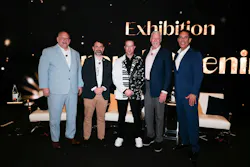
Freddie Ravel arrived at YNOW2026 with a tuning fork and a message about how the structure of music can illuminate the structure of success.
By the time the internationally recognized composer, recording artist and keynote speaker left the stage, that idea had become an organizing principle for the conference, shaping not only the opening day’s general session but also broader discussions about how Yokogawa and its partners can move from technological possibility to coordinated action.
That framing matters because Kevin McMillen, President of Yokogawa Corporation of America, Corporate Officer Yokogawa Electric Corporation, had already this morning presented a broader challenge to the room with his opening keynote, In Tune with Tomorrow: The Rhythm of Innovation and Human Potential. In an industry awash with data and technologies, the task of making those pieces work together can be an overwhelming challenge. The objective, he noted, was to move from complexity to clarity, insight to action and ultimately, action to results.
"Success does not come from a single technology," McMillen said. "Success comes from collaboration. Success comes from operators, engineers, maintenance teams, process experts, scientists, IT professionals, business leaders, technology partners, and increasingly intelligent digital systems. Each of these plays an important role. Each contributes unique expertise. And when they work together, they create something far greater than any individual could create alone. It's much like an orchestra."
If McMillen laid out the case for orchestration by bringing people, expertise and technology into alignment, Ravel gave that idea a language the entire room could immediately understand: melody, harmony and rhythm. The musician’s central message was very much in tune with an organization navigating AI, automation and connected systems.
Drawing on his work with performers from Madonna to Carlos Santana, Ravel's presentation offered a practical framework for helping Yokogawa's partner ecosystem work together, navigate change and build toward the future.
The idea also sharpened one of Ravel’s more practical arguments: listening is a leadership skill, not a soft add-on. He described listening as a “superpower” and, in a business environment increasingly crowded with notifications, messages and competing demands, as a form of risk-management. He reminded the conference attendees that just hearing more information is not enough. Organizations must also create the space to understand information. His metaphor of the “pause between the notes” (the space that allows a listening audience to process what it has heard) became a useful counterpoint to an industry often focused on accelerating, well, just about everything.
Three lessons in orchestration
Putting Ravel's theory into practice, the panel discussion, Orchestrating Progress: Creating Harmony Across People, Processes and Partnerships, rounded out the morning session. Three themes emerged:
1. Progress starts with a shared goal and requires ongoing adjustment.
James Griffin, Associate Vice Chancellor, Senior Vice President-LyondellBasell Center for Petrochemical, Energy & Technology, San Jacinto College, described how the school brought 60 industry partners together to design its 160,000-square-foot training facility eight years ago. Unsurprisingly, there were different ideas and approaches, and purposeful collaboration became a cornerstone of the project's success. As Griffin put it, "It was really that collaboration to determine: What does progress look like? What does the industry need? How do we measure that? How do we stay engaged every day so that we continue to make progress?"
Rather than assuming everyone would agree on what progress meant, the partners established shared goals, tested approaches and measured results together, Griffin explained. It was orchestration in practice: different stakeholders contributing distinct expertise while working toward a common objective.
2. Alignment requires bringing the right players into the room early.
Next, Josh Fleig, Chief Innovation Officer, Louisiana Economic Development, explained how the state agency created a "quarterback" role to coordinate other agencies around major projects. Rather than handing projects from one body to another, key regulatory agencies are brought into the conversation from the outset.
"We effectively pulled together what is a cabinet meeting of all the other state agencies to get in front of these large projects, so that we made sure that we were tackling them together," Fleig said, noting how the approach turns potential friction into smooth coordination.
3. Technology works best when it amplifies human capability.
The panel’s discussion of artificial intelligence (AI) moved beyond workforce replacement toward real workforce augmentation. Griffin talked about using AI to capture institutional knowledge and encouraging his college students to remain curious; McMillen described engineers using AI tools to more quickly and accurately execute processes that they already knew; and Fleig argued that automation should move people away from “dull, dirty and dangerous” work toward higher-value activities. Ravel's theory rounded out the discussion—that technology is another instrument in the orchestra, not the conductor.
Moderated by Nicholas Meyer, Director of Marketing at Yokogawa Corporation of America, the session concluded with a lightning round of questions in which panelists were asked to identify the essential ingredients for successful partnerships. McMillen chose transparency and trust. Fleig emphasized follow-through. Griffin pointed to respect, commitment and harmony.
Different words. Same score.