Eco World Water rethinks wastewater treatment from the ground up
Produced with support from Yokogawa
This show takeover was sponsored by our YNOW2026 coverage partner, Yokogawa. See more coverage on our YNOW2026 page.
What if we could dramatically reduce the footprint of wastewater treatment plants? And would it be too much to ask if we reduced the treatment cycles? Oh, and the smell. What if we could simplify the biological processes and do something about the odor and the emissions?
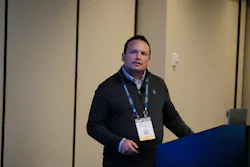
Santiago Contreras, Vice President of Engineering at Eco World Water, informed conference attendees at YNOW2026, A Yokogawa Users Conference & Exhibition, that his company has developed an alternative wastewater treatment designed to fulfill all of these requests.
“Our mission from day one was to make clean water available to everyone in the world, while at the same time reducing pollution of the environment,” Contreras said.
Eco World Water’s approach grew out of work begun a dozen years ago by wastewater-industry veterans frustrated with the limitations of existing treatment technologies. Instead of incrementally improving conventional systems, they took a broader view, examining the sources of cost, inefficiency and maintenance. They attacked them individually.
“We started analyzing all the different types of wastewater-treatment systems that are out there, all the different technologies, what’s available,” Contreras explained. “We started looking at all the problems that exist, what makes it expensive, what makes it inefficient, and we slowly fixed each one of those issues one at a time.”
Challenging biological treatment
Municipal wastewater treatment often depends on biological processes in which microorganisms digest waste. Those facilities can be expensive, labor-intensive and difficult to expand, Contreras said.
“The process itself, because you’re relying on bugs to digest the waste, creates very long retention times,” he said. “It takes five or more days just from the beginning that you receive the wastewater to when you’re bringing out the product water.”
Capacity expansion presents another problem. Municipalities may design plants based on population forecasts extending 10 or 15 years into the future, only to discover that actual growth exceeds those projections.
“We’re talking five years of just planning to be able to build this thing, and then the building cycle is another two or three years,” Contreras said. “So we’re talking seven years to expand.”
Eco World Water’s core alternative is its Eco Separator, a compact, skid-mounted system that replaces biological digestion with chemical coagulation, flocculation, air injection and physical separation. The vice president detailed how their Eco Separator replicates an entire wastewater plant in a small, tiny system that fits on a skid, relying on no biological process, no digestion, and it happens in about five minutes of treatment.
Making solids float
The system begins by adding a coagulant polymer, encouraging solids to attach to one another. Wastewater spends about three minutes traveling through coagulant-mixing tubes while the chemical reaction occurs. “No moving parts,” Contreras emphasized. “It’s just retention time inside of a pipe.”
Air is then introduced using Venturi injectors rather than compressors or large blowers. Wastewater flow itself creates suction that draws air into the stream and produces microbubbles. “We’re able to inject air with multiple-size air bubbles,” Contreras said. “Different-size air bubbles target different contaminants.”
A flocculant then encapsulates the air around coagulated particles. Repeated mixing, additional air injection and a hydrocyclone ultimately produce layers of trapped air that make the solids buoyant.
“We end up with 20-25 layers of trapped air,” the speaker said. “We are able to reduce our separation to under a minute, which is the fastest that there is.”
That speed enables a smaller separation tank to process higher flow rates. A typical separator occupies roughly a 7-by-10-ft space.
The system is also designed around maintainability. Components are off-the-shelf, the tank is plastic to prevent corrosion, and metallic components are stainless steel. “Absolutely every component can be replaced in less than 10 minutes, so it’s extremely easy with simple tools, and anyone can do it,” said Contreras.
From wastewater to distilled-quality water
The separation process produces a concentrated sludge of about 6.5 percent total solids, according to Contreras, compared with roughly 1.5 percent for a typical wastewater plant, which can substantially reduce downstream sludge storage, hauling and dewatering requirements.
Product water leaves the separator at about 15 mg/l total suspended solids (TSS). Media filtration can reduce that to approximately 5 mg/l before the water reaches ultrafiltration membranes. “Because we get the water so clean right out of our separator, we’re able to use media filtration,” Contreras explained. After ultrafiltration brings TSS to zero, the water passes through ultraviolet disinfection and then reverse osmosis.
“We’re able to get to distilled-quality water in about seven minutes with this system, whereas the other systems take days,” he added, highlighting an installation in Spring Lake, Florida as an illustration of the technology’s footprint. A system processing approximately 60 gal/min fits inside a 40-ft shipping container, while the existing plant next to it occupies about 7 acres.
Yokogawa instruments for the measurements
Instrumentation reliability is particularly important because Eco World Water wants its systems to operate for decades. Contreras said Yokogawa equipment has been part of the technology since its earliest pilot system. “All of our flowmeters are Yokogawa. We want all of our equipment to last forever.”
Eco World Water also uses Yokogawa pressure transmitters, analyzers, pH probes and conductivity instruments. Contreras said some equipment from the company’s original pilot remains in service. “We’ve experimented switching just about every other instrument to different brands, but we’ve never switched the Yokogawa equipment,” he said.
Eco World Water plans to measure changing-solids concentrations in incoming wastewater and automatically adjust polymer dosing accordingly. “Our goal is to be able to detect the concentration of the solids in the raw wastewater and use a mass flowmeter to tell us the change in density,” Contreras explained, “so the measurement could feed into the programmable logic controller (PLC) and automatically adjust the dosing pumps. That would be the first completely automated polymer-dosing system, and we hope to be able to work on that with Yokogawa to accomplish it.”
Scaling treatment one train at a time
Contreras identified poultry processing, food and beverage, paper mills, textiles and data centers among potential applications. For data centers, the technology could address growing concerns about the large quantities of municipal water consumed for cooling. Rather than competing with communities for potable supplies, a facility could potentially treat wastewater to high purity and reuse it.
“Not only could you use raw wastewater from a sewage plant, treat it to distilled-quality water and use that to cool down your data centers, but water that has already gone through the data center can be recycled,” noted Contreras. “You can get about 95% of it reused.”
The modular architecture also changes how capacity can be added. Instead of constructing a new plant when demand increases, operators can add another treatment train. “We just add an additional train when the population grows,” Contreras said. “You don’t have to touch your existing capacity.”
Eco World Water has designed modules ranging from 60 to 2,000 gal/min and can combine multiple trains to meet larger requirements while allowing individual trains to switch on or off as flow changes. Wastewater treatment doesn’t necessarily have to mean enormous tanks, multiday biological processes and years-long expansion projects, Contreras emphasized. “You can choose to create irrigation-grade quality water, drinking water or distilled water out of wastewater.”
For Eco World Water, the ultimate objective extends well beyond improving wastewater-plant economics. Contreras framed the technology around a much bigger challenge: making water that would otherwise be treated as waste usable again.
“When the world runs out of clean water,” he said, “this is going to save the world.”
About the Author
 Mike Bacidore
 Mike Bacidore
Control Design
Mike Bacidore is chief editor of Control Design and has been an integral part of the Endeavor Business Media editorial team since 2007. Previously, he was editorial director at Hughes Communications and a portfolio manager of the human resources and labor law areas at Wolters Kluwer. Bacidore holds a BA from the University of Illinois and an MBA from Lake Forest Graduate School of Management. He is an award-winning columnist, earning multiple regional and national awards from the American Society of Business Publication Editors. He may be reached at [email protected]