111 years In Tune with Tomorrow
Produced with support from Yokogawa
This show takeover was sponsored by our YNOW2026 coverage partner, Yokogawa. See more coverage on our YNOW2026 page.
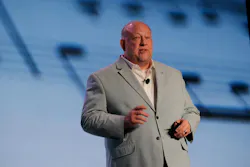
When you’ve been operating—successfully—in a space for 111 years, you learn a few tricks to remain relevant. “Our longevity is the result of continuously evolving alongside our customers,” explains Kevin McMillen, President of Yokogawa Corporation of America, Corporate Officer Yokogawa Electric Corporation, who notes how the industrial-automation pioneer progressed from humble beginnings as an electric-meter research institute in Shibuya, Tokyo all the way back in 1915.
Over the past century-plus, Yokogawa has evolved from measurement instruments to industrial automation, digital transformation, and now the next generation of autonomous and sustainable operations. “We have remained relevant because we never view innovation as a destination,” adds McMillen. “We view it as a journey.”
What has remained constant throughout Yokogawa’s history is a commitment to solving real customer challenges through long-term partnerships. Those professional partnerships are on full display at each YNOW Users Conference & Exhibition, where leaders from global corporations gather to listen and learn, share insights and renew bonds with the wider Yokogawa community.
The reason for that loyalty? McMillen has a few ideas. “Rather than simply delivering products, we work side-by-side with our customers to improve safety, reliability, efficiency, sustainability and business performance. This is what we mean when we reference ‘co-innovating tomorrow.’ We believe that innovation is a collaborative, iterative journey that we embark on with our customers. That collaborative approach allows us to anticipate change and help shape what comes next.”
So, what does come next?
The YNOW2026 Users Conference & Exhibition is the best place to preview what comes next in the industrial-automation landscape. This year’s theme—In Tune with Tomorrow—references that harmonizing people, technology and purpose creates sustainable value…a benchmark of Yokogawa since its inception. As the industrial world experiences unprecedented change driven by AI, digitalization, workforce transitions, and sustainability goals, success will depend on how well organizations align these elements rather than focusing on any single technology, according to McMillen.
Strategically, that means helping customers connect operational technology, information technology, data and human expertise into a cohesive whole.
“We believe the future belongs to organizations that can combine advanced automation and AI with the knowledge and creativity of their people. Our role is to help customers navigate that journey and transform complexity into opportunities. With a lens on tomorrow, those transformative solutions must be scalable and flexible enough to easily adapt to the changing landscapes on our customers' path.”
Trends watch
Those customer paths are winding ones, increasingly in this era where new technologies emerge (seemingly) on a daily basis, artificial intelligence is rewriting the rules of doing business, and customer expectations (driven to a great degree by the enhanced capabilities they enjoy in their personal interactions with services ranging from food-delivery to transportation) that expect full insight, full performance and full flexibility to work how they want to work.
McMillen recognizes four major trends shaping the future of industry in this ever-changing world.
- First is the rise of industrial AI and autonomous operations. Organizations are looking beyond automation toward systems that can learn, adapt and make intelligent decisions in real time, he says.
- Second is sustainability and the energy transition. “Companies are under increasing pressure to reduce emissions, improve energy efficiency, and build more sustainable operations while maintaining profitability.” This is a good thing for all of us, and a call to action for solution providers to lead the charge toward s truly sustainable, energy-efficient processes.
- Third is workforce transformation. McMillen cites how an increasing number of industries face unprecedented labor shortages, knowledge-transfer challenges as workforces retire, and an increasing need to equip their teams with digital capabilities.
- Fourth and final is the creation of unified industrial data ecosystems; the ability to turn data into actionable insight across the entire enterprise will become a key competitive differentiator, he believes.
“These trends are interconnected, and the organizations that successfully integrate them will be best positioned for long-term success,” McMillen summarizes.
Smart customers demand more, smart providers respond
Customers today expect outcomes, not just technology. Many, in fact, couldn’t care less about the technology, so long as it delivers the outcomes they require.
Not long ago, organizations were focused on digitizing individual processes or implementing isolated solutions. Today they seek out integrated solutions that can deliver measurable improvements in productivity, safety, asset performance, sustainability and business agility. Digital programs must work across these disciplines and deliver all expected outcomes.
End users also expect a practical path forward. Most customers are not looking to replace everything they already have. They’d rather not, in fact, fearing the disruption of production and the costs associated with such overhauls. Rather, they want to leverage existing investments while progressively adopting AI, advanced analytics, autonomous capabilities, and new digital tools.
And in the modern era of industrial automation, this is feasible.
“At Yokogawa, we call this the journey from Industrial Automation to Industrial Autonomy, or IA2IA,” explains McMillen, adding that this is a step-by-step approach that helps organizations advance at a pace that fits their operational maturity while ensuring they realize tangible business value along the way.
Serving the people in this data-driven world
In the modern era of industrial automation, as is spotlighted at YNOW2026, technology alone does not drive transformation.
People do.
“We are investing in our employees by expanding digital skills, fostering innovation, and creating opportunities for collaboration across traditional organizational boundaries. We are also embracing AI internally to improve productivity and enhance how we serve customers,” says McMillen, clearly proud of this initiative to develop a world-leading team that can fully capitalize on the efficiencies afforded by artificial intelligence to better meet the needs of those they serve. “At the organizational level, we are accelerating our focus on digital transformation, advanced analytics, AI-enabled solutions, smart manufacturing, and autonomous operations. Equally important, we are maintaining the customer-centric culture that has defined Yokogawa for more than a century.”
The goal of all these efforts? Creating an environment where people and technology amplify one another. The future of automation is not about replacing human expertise, according to Yokogawa’s North American leader, it is about empowering people with better information, better tools, and better decision-making capabilities.
In Tune with Tomorrow
So what will tomorrow bring? A continuation of the legacy of performance that began back in 1915. Yokogawa will be the trusted partner that helps industrial organizations harness AI, digital transformation, and industrial autonomy to build safer, smarter and more sustainable operations for the future.
Innovation isn’t a destination, as McMillen noted earlier, it is a journey. And what a long and prosperous journey it has been.