Remote operations require a different design mindset
Produced with support from Yokogawa
This show takeover was sponsored by our YNOW2026 coverage partner, Yokogawa. See more coverage on our YNOW2026 page.
The process industries have spent decades steadily moving people away from equipment and bringing more information into the control room. The next step could eventually move much of the workforce away from the plant altogether. That transition, however, won’t happen simply by adding artificial intelligence, robots or more sophisticated control systems.
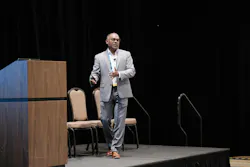
During YNOW2026, A Yokogawa Users Conference & Exhibition, Javeed Mohammed, Department Manager, Control Systems at Fluor Canada, outlined the engineering and operational changes necessary to move plant operations toward remote and potentially autonomous operations.
The transition is a journey involving end users, engineering, procurement and construction (EPC) companies, automation suppliers, original equipment manufacturers (OEMs) and system integrators, Mohammed emphasized. Remote operations represent the latest stage of a long automation evolution.
Mohammed illustrated that progression with a simple pressure measurement. A field operator might have walked to a pressure gauge, recorded the reading and reported it to the control room in the past. Electronic pressure transmitters brought that information directly into control systems. Diagnostics subsequently provided more information about instrument and process health, while integrated operations connected field, engineering, operations and maintenance personnel. Centralized operations then made it possible to oversee multiple facilities from a common location, explained Mohammed.
Remote operations take the concept further, reducing the need for personnel at facilities that may be isolated, difficult to reach or exposed to challenging environmental conditions. The objective isn't simply eliminating workers. Instead, companies can optimize personnel, use specialized expertise more effectively and reduce workers’ exposure to hazardous environments, Mohammed stressed.
Start with remote operation in mind
One of the biggest obstacles is that existing engineering specifications were often written around the assumption that someone will be physically present. Consider an air-compressor package equipped with a programmable logic controller (PLC). If an alarm requires someone to open a panel and manually press a reset button, the package inherently requires local intervention. “That is not going to work for your remote operations,” Mohammed noted.
Specifications and procedures therefore need to define which functions can be monitored remotely, which can be controlled remotely, and which information should be used for diagnostics or predictive maintenance. Those specifications and standards written before remote operation was a consideration need to be updated.
Companies also must capture operational knowledge currently residing in their workforce. Experienced operators often know what to do when a particular alarm occurs or equipment fails. An autonomous system must somehow incorporate enough of that experience to respond appropriately. Maintenance strategies change, too. A relatively minor equipment problem becomes much more significant if resolving it requires flying a technician to an isolated facility.
Consequently, organizations need to determine their desired operating model early. A facility might be fully remote, hybrid, centrally operated or even autonomous. Network segmentation, cybersecurity and communications architecture must support whichever model is designated.
IOGP 627 is an important reference for remote operations, providing principles for considering operations and maintenance, recommended Mohammed, who expects industry guidance to continue evolving as companies gain experience and share lessons.
EPC organizations can play an important role in that process because they sit between end users, automation suppliers, OEMs and integrators. That position allows them to help define requirements and identify and mitigate risks across the project lifecycle.
Safety and alarming
Functional-safety principles still apply, but assumptions behind safety analyses may need to change. Mohammed highlighted IEC 61511, noting that hazard and operability (HAZOP) studies, layers of protection analysis, safety integrity level (SIL) assessments and safety requirement specifications have traditionally assumed human intervention. If operators are miles away rather than inside the facility, some of those assumptions may no longer be valid.
The same issue applies to alarm management under ISA-18.2. An alarm requiring an operator response has different implications when the operator is onsite versus at a remote operations center. Technology therefore represents only part of the solution. People and processes must evolve along with it, supported by governance and clearly defined operating procedures.
Communications as infrastructure
Remote operations depend heavily on network infrastructure and bandwidth. Engineers must determine what happens if communications fail. Does the facility stop? Can local personnel take control? Or can the process continue autonomously until communications return?
Some plant operations consider making communications redundant, including combinations of fiber-optic and satellite connections. Autonomous operations cannot be treated simply as another automation project. Prior to the COVID-19 pandemic, a client asked Fluor how it could make a facility completely unmanned, Mohammed recalled.
His initial reaction as an engineer was that it was impossible. However, after studying the issue and working with end users and suppliers, he has changed his view. “It is possible,” Mohammed said. “But are we there 100%? No. It is a journey.”
Mohammed believes the industry will, some day, operate facilities without people routinely on site. Getting there will require companies to rethink specifications, procedures, risk assessments, communications and maintenance practices.
That won’t happen overnight, but project by project.
The most important first step may therefore be less about selecting technology than changing expectations about how plants are designed and operated. “It is a mindset,” Mohammed said. “It is a journey, and you have to get those aspirations built into that journey.”
About the Author
 Mike Bacidore
 Mike Bacidore
Control Design
Mike Bacidore is chief editor of Control Design and has been an integral part of the Endeavor Business Media editorial team since 2007. Previously, he was editorial director at Hughes Communications and a portfolio manager of the human resources and labor law areas at Wolters Kluwer. Bacidore holds a BA from the University of Illinois and an MBA from Lake Forest Graduate School of Management. He is an award-winning columnist, earning multiple regional and national awards from the American Society of Business Publication Editors. He may be reached at [email protected]