From autonomous science to trusted autonomy
Produced with support from Yokogawa
This show takeover was sponsored by our YNOW2026 coverage partner, Yokogawa. See more coverage on our YNOW2026 page.
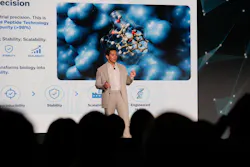
"The true breakthroughs come when you stop optimizing the past and start designing the future."
That impactful line was delivered by Dr. Fabio Barros, Chief Science Officer at Rio Biofarmaceutica Brasil (RBBL), during the opening session of Day Three at YNOW2026 titled From Discovery to Design: How RBBL Uses Data, Analytics and AI to Engineer the Future of Wellbeing.
But what does that mean in the industrial-automation context? Barros argued that the pharmaceutical industry must move beyond traditional drug discovery and toward what he described as "drug design," using data, analytics and AI to better understand complex biological systems, and ultimately better serve humanity.
Rather than focusing on single targets and incremental improvements, he advocates for designing therapies around the dynamic interactions that drive disease. During his presentation, Barros pointed to the promise of peptide-based medicines, which can offer the specificity of biologics while providing greater flexibility as development platforms. By making targeted changes to peptide structures, researchers can adapt therapies to address multiple conditions and varied patient populations.
For Barros, the limiting factor is not the discovery of new therapies but the ability to interpret the growing volume of data needed to understand them. As drug development becomes more complex, pharmaceutical companies must manage increasingly sophisticated processes and larger volumes of data. To support that effort, RBBL has incorporated advanced analytical technologies such as FlowCam imaging to characterize and identify particles in pharmaceutical products.
"When we purchased the equipment, we saw that it's not just to see the particle," he explained. "We can identify the particle. We can characterize the particle. When we saw that, we said, ‘Well, this is amazing because if I link with the other equipment, I can understand where this particle came from, and I can adjust my process to avoid this.’"
Barros detailed how RBBL is working to make data a critical part of its infrastructure, connecting research, analytics and manufacturing information across the organization. To support that effort, the company is bringing analytical, particle characterization, along with potency and process data into shared digital environments where AI can identify patterns within this larger pool of information, generate insights and more accurately inform decision-making. In doing so, Barros argued that pharmaceutical companies must move beyond traditional data-driven approaches rooted in historical information and toward predictive systems capable of anticipating outcomes and boldly guiding future development.
How to get there
Barros said RBBL is working to make data a core part of its infrastructure by strategically connecting research, analytical and manufacturing information across the organization to a depth they haven’t before attempted. To support that effort, the company is aggregating that information into shared digital environments where AI can identify formerly invisible patterns, then generate sharper insights to inform human decision-making. He touched on that human / AI interplay that has been central to many of the discussions this week at YNOW.
So where does this lead? Ultimately, the doctor envisions an autonomous science model in which experimentation, data collection, advanced learning and optimization form a continuous loop, accelerating both drug development and autonomous manufacturing improvement.
"We want to move toward this autonomous science in which we experiment, collect data, learn it, improve on it, and repeat it," he said.
From designing smarter systems to defining their authority
While Barros focused on building the data and intelligence needed to create more adaptive systems, the morning's second presentation explored a related question: once autonomous systems can make better decisions, how much authority should they be given to act on them? (Another common theme this week.)
In the general session that followed the doctor, titled Trusted Autonomy, George Niño, Yokogawa's Executive Vice President of Legal and Compliance, and Kevin Blum, Chief Sales Officer and Chief Operating Officer for E&S and Materials, examined what it takes to move from AI-generated recommendations to AI-enabled action and, more importantly, when we can trust that a machine has earned the authority to take action.
The dialogue between Blum and Niño highlighted a different set of engineering realities: accountability, cybersecurity, operational risk and the organizational trust required to put autonomous systems to work. They argued that autonomy should not be granted as a leap of faith, but rather earned through evidence. As systems demonstrate they can operate reliably within defined boundaries, organizations can progressively delegate authority.
One key message was that clear boundaries, auditability, cybersecurity and defined intervention points provide the foundation for moving faster without taking unnecessary risks. For Niño, the answer starts with evidence. "You relinquish authority in response to evidence showing that the system has earned that authority."
Blum broadened the challenge beyond the technology itself: "Autonomy is not a software project... it's a design assumption."
Lastly, the speakers addressed a recurring industry concern in the larger artificial-intelligence discussion: will AI take my job?
As machines assume more routine decisions, noted Niño, the human role does not disappear. Instead, it evolves. Operators may intervene less frequently, but when they do, their decisions can carry greater consequence. This places a premium on domain expertise, training and the ability to recognize when a system has reached the limits of its authority.
The ultimate autonomy of humanity, if you will.