Across an ocean and to the frontier of control theory
Key Highlights
- At ETH Zurich and the University of Minnesota, mentors like George Stephanopoulos taught him how to ask meaningful research questions.
- At California Institute of Technology, he helped build interdisciplinary research environments
- Morari helped turn MPC from theory into widespread use.
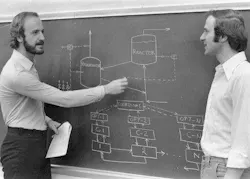
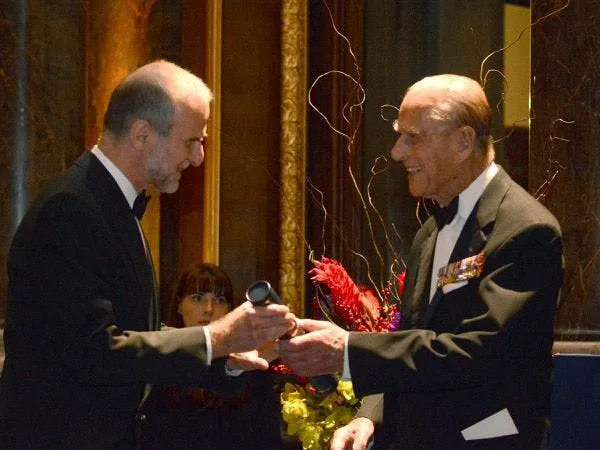
When Manfred Morari learned of his election to the 2026 Process Automation Hall of Fame, his first reaction wasn’t triumph, but humility. The list of past inductees includes several colleagues, whose work he admires and whose advice shaped his own career.

This recognition caps a career that’s spanned continents, and helped bring one of the most influential techniques in modern automation—model predictive control (MPC)—from concept to widespread industrial reality and application.
The spark came in a classroom
Morari’s path to engineering began, not in a laboratory, but in a classroom in Graz, Austria. As a student, he found inspiration in a high school teacher, who taught chemistry, physics and mathematics with unusual enthusiasm. That teacher sparked Morari’s fascination with the physical sciences, and set him on the road toward engineering.
He eventually enrolled in chemical engineering at ETH Zurich, one of Europe’s leading technical universities. However, the next major step in his career required crossing the Atlantic Ocean to reach the upper Midwest of the U. S. In the mid-1970s, communication between Europe and the U.S. was far more limited than it is today. Morari jokes that the only widely known facts about Minnesota at the time were that it was extremely cold and that its state bird was the mosquito.
His decision to attend graduate school at the University of Minnesota was largely thanks to the influence of a mentor at ETH, who had studied there himself and encouraged him to apply. That encouragement proved decisive. Minnesota’s chemical engineering program was widely regarded as one of the strongest in the world, and Morari found himself immersed in an intellectually demanding environment.
“I never worked harder in my life,” he says.
At the U of M, his Ph.D. advisor was a young assistant professor named George Stephanopoulos, only a few years older than himself. Their relationship proved formative. Rather than a traditional hierarchy, the two worked more like collaborators. From Stephanopoulos, Morari says, he learned the crucial skill of formulating meaningful research questions—an ability that would define his later work.
The student becomes the teacher
Morari’s first faculty position came at the University of Wisconsin–Madison, where he continued to benefit from strong mentorship. One colleague in particular, Harmon Ray, who’s also a Hall of Fame member, offered frank advice that helped guide the early years of Morari’s academic career.
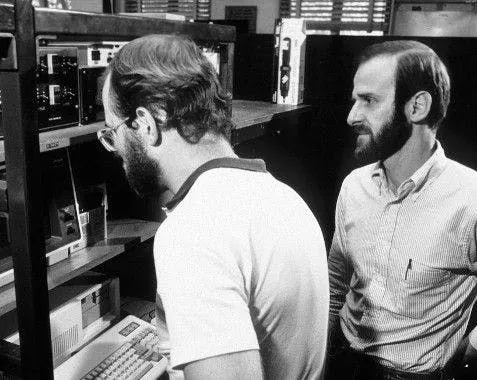
Morari soon joined the faculty at California Institute of Technology (Caltech), an environment he describes as intellectually unparalleled. At Caltech, he played a key role in building what would become one of the world’s leading centers for control theory. Along with colleagues, including John Doyle, Morari helped establish the Control and Dynamical Systems Dept. The initiative brought together researchers from multiple disciplines to tackle complex system problems.
Europe still captured his heart
In the 1990s, Morari made another major life decision. He returned to Switzerland to lead the Automatic Control Laboratory at ETH Zurich. The move was motivated partly by a desire to reconnect with Europe.
At ETH, he found resources that were, in his words, “almost unlimited.” But he also noticed differences in graduate preparation contrasting with the elite programs he experienced in the U.S. To address this, he broadened recruiting efforts to include students from southern and eastern Europe, many of whom would later become prominent leaders in control engineering.
Even retirement didn’t slow Morari down. Swiss universities enforce mandatory retirement at age 65, and when that moment arrived, he wasn’t ready to stop working. Multiple institutions invited him back to North America, and he eventually joined the University of Pennsylvania, where he continues to teach and conduct research.
“At Penn, the talent and interest pool was a perfect environment for me to move into a different area,” he says.
There, he shifted focus toward a rapidly emerging field combining learning and control—Learning for Dynamics and Control (L4DC).
Bridging academia and industry
Although best known as an academic, Morari has maintained strong ties with industry throughout his career. He’s held positions or consulting roles with Exxon, ICI, Shell, BP and United Technologies.
Get your subscription to Control's tri-weekly newsletter.
The rise of model predictive control
Morari is perhaps best known for advancing MPC, a technique that’s become foundational in modern process automation.
The concept behind MPC is straightforward. Engineers use a mathematical model of a system to predict how it will behave over a future time period.
The roots of MPC date back decades. One early influence was the work of Hall of Fame member Charlie Cutler at Shell, who proposed the idea in a doctoral research proposal in 1969. However, for years, the concept remained largely theoretical because computers lacked the power to perform the necessary calculations in real time.
As computing capabilities improved, the technique matured through collaboration between industrial engineers and academic researchers. Morari and his colleagues helped develop the rigorous mathematical frameworks that transformed MPC from a promising idea into a practical methodology.
“The big advantage of MPC is you can easily deal with complications like multivariable systems, constraints and nonlinearities,” Morari explains.
Today, MPC is used far beyond chemical processing. It appears in applications ranging from robotics to aerospace control. Algorithms resembling MPC even showed up in research on spacecraft reentry decades before the technique became mainstream.
Education, AI and the next generation

Artificial intelligence (AI) is already transforming engineering education, though Morari believes the field hasn’t yet figured out how to use it effectively. The intersection between AI and control theory—particularly integrating learning with model-based control—is likely to define the next era of research.
The impact of people
Looking back on his career, Morari doesn’t point first to theories or technologies. Instead, he credits the people around him.
More than 100 former students and collaborators have gone on to influential roles in academia and industry. Among them are fellow Hall of Famers Carlos Garcia, a pioneer of MPC at Shell, and Sigurd Skogestad, whose research and textbooks helped shape modern control engineering.
Some moved far beyond academia. One former colleague, Pascal Grieder, eventually became CEO of the Swiss postal system.
For Morari, those achievements represent the most meaningful legacy of his work. Ideas matter, but the people who carry them forward ultimately determine how a field evolves.
As process automation enters an era defined by artificial intelligence, digitalization and increasingly complex systems, Morari’s career offers a reminder that progress rarely happens in isolation. It grows from collaboration across universities, industries and generations of engineers.
See the other 2026 Process Automation Hall of Fame inductees here:
About the Author
 Len Vermillion
 Leaders Logo
Leaders relevant to this article: