Key Highlights
- Born in Rizhao, China, Qin overcame early hardships during the Cultural Revolution to pursue higher education at Tsinghua University and later earned a Ph.D. in chemical engineering from the University of Maryland.
- His interdisciplinary background enabled him to innovate across sectors, from semiconductor manufacturing to energy, emphasizing the transformative potential of data analytics in process control.
- Qin advocates for integrating machine learning and AI into chemical engineering, highlighting the gap between current computational capabilities and industry utilization.

S. Joe Qin’s career reads like a master class in intellectual agility. Born in Rizhao near Qingdao in China’s Shandong province, he came of age during the Cultural Revolution—a period which emphasized children performing hard work over education. To wit, he admits, he I didn’t study much until junior high.
It may seem odd now since Qin is president of Lingnan University in Hong Kong, but with formal schooling barely functional, Qin taught himself carpentry and tailoring, constructing wooden chairs at 11 years old just to have a means of making a living.
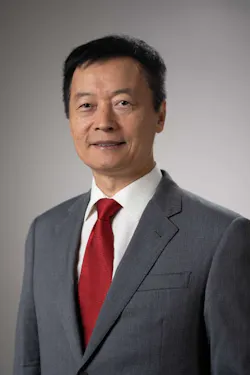
In China, automatic control held the status of a top-tier academic discipline in its own right, and the rigorous curriculum at Tsinghua provided Qin with a foundation that would serve him across continents and careers.
A pivotal encounter came in 1988, when Professor Harmon Ray of the University of Wisconsin, also a Process Automation Hall of Fame member, visited Tsinghua and advised Qin to pursue his doctorate in chemical engineering at the University of Maryland. It was advice Qin calls critical and life changing. Working under Professor Tom McAvoy, whom he credits as one of the most enthusiastic mentors a young researcher could hope for, Qin earned his Ph.D. driven by a curiosity about how machines could learn. His early graduate work included pioneering research on neural networks. He examined the pros and cons of these models from a statistical perspective, laying the groundwork for his later contributions to industrial data analytics and machine learning. He then spent three years as a principal engineer at Emerson Process Management, developing two commercial products before the academic world beckoned him back.
A career built on disciplinary migration
In 1995, Qin joined the University of Texas at Austin’s Department of Chemical Engineering, eventually rising to full professor. Over 12 years in Austin, he found himself at the center of a booming semiconductor manufacturing industry eager to apply statistical process control, multivariable monitoring and fault detection techniques. Then came a move to the University of Southern California, where the semiconductor work gave way to a new frontier: energy. As part of USC’s CiSoft center—a joint venture with Chevron—Qin turned his attention to upstream oil operations and smart field optimization.
This pattern of reinvention is not accidental. Qin credits his interdisciplinary training—straddling electrical engineering, control theory and chemical engineering—with giving him the confidence to explore unfamiliar territory. That breadth allowed him to publish widely across process monitoring, system identification, chemometrics and machine learning.
What data means for process control
Ask Qin about the future of the process industries, and the conversation quickly turns to data. After all, he’s known for his research on industrial data analytics, model predictive control, and fault diagnosis, among other disciplines. He is direct about the gap that exists between what computing power can now do and what the chemical engineering sector has yet to exploit.
He points out that process engineering has, for the past 30 to 40 years, traditionally been about collecting a large amount of data, but computational power has only increased dramatically recently. He says many of the new opportunities arising from machine learning and artificial intelligence have not yet been realized in chemical engineering.
Get your subscription to Control's tri-weekly newsletter.
The analogy he reaches for is e-commerce and social networking, where data has long guided major strategic decisions. Translating those same analytical tools to chemical processes—for performance monitoring, control and optimization—represents a compelling opportunity. Qin describes this not as replacing traditional modeling approaches but as complementing them. In his view, the next generation of process engineers will need to be as fluent in data analytics and machine learning as they are in thermodynamics and fluid mechanics.
Engineering education under strain
Few topics stir Qin’s thinking more than the state of engineering education. As both a longtime professor and now an academic administrator he sees the tension between rigor and accessibility playing out in real time. He laments the lessening of mathematics teaching in engineering today compared to 30 years ago, and says it’s because most people want a program where even the average student can understand most of the concepts and graduate easily.
He reflects on a linear algebra course he took as a graduate student, one where fewer than 10% percent of students fully grasped the material as it was taught. Today, student teaching evaluations and institutional pressure to improve pass rates have made such approaches difficult to sustain. Qin does not dismiss those pressures but argues they come at a cost—the advanced mathematical talent the field needs is going underdeveloped.
He believes institutions must create deliberate environments for mathematically gifted students to be challenged at the appropriate level. Countries like China and Russia, he notes, have maintained stronger mathematical training pipelines, and the global talent pool for advanced control work reflects that difference.
An obligation to share
Qin sees his induction less as a capstone than as a prompt—to speak more openly about both the right and wrong paths through a career in engineering, and to make that hard-won experience accessible to younger generations.
The mentors he names—Tom McAvoy, Harmon Ray, Tom Edgar, James Rawlings, John MacGregor, Lennart Ljung—form a lineage of scholarly generosity that Qin is clearly intent on perpetuating. His advice to young engineers is characteristically long-range: resist the pull of short-term rewards, recognize the full arc of what you are capable of, and keep the bigger picture in sight.
For a man who once built as a child just to survive, the arc from Shandong to the Process Automation Hall of Fame carries its own quiet eloquence.
See the other 2026 Process Automation Hall of Fame inductees here:
About the Author
 Len Vermillion
 Leaders Logo
Leaders relevant to this article: