Key Highlights
- Morgan’s journey started with childhood experiments (like building a crystal radio).
- His “accidental master’s” came after a layoff, turning a setback into opportunity.
- At Syncrude Canada, he helped lead a bold shift from analog to distributed digital control systems.
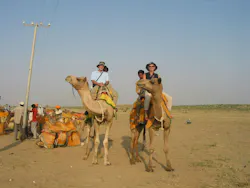
There are engineers who fall into their careers, and there are engineers who seem destined for them. Peter Morgan—newly inducted member of the 2026 Process Automation Hall of Fame is, by his own cheerful admission, somewhere in between.
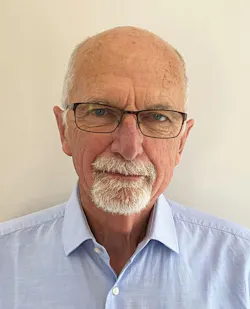
“I suppose I was always a bit of a nerd,” he says with a laugh, recalling how, as a boy growing up in England, he set out to build a crystal radio, and found himself hunting down a germanium transistor to boost its output. That early curiosity about how things work carried him across decades and continents, through nuclear power plants and oil sands facilities, and from analog computers that were the size of rooms to the distributed digital control systems that define the industry today.
His ‘accidental master’s’ and career beginning
Morgan’s formal journey began with a student apprenticeship at the Central Electricity Generating Board in the U.K., a cooperative program that sponsored his bachelor’s degree in electrical engineering. His first professional position was at a large thermal power plant—good experience, he acknowledges, but not quite enough.
“I was looking for more,” he says.
His search led him to the Nuclear Power Group, a British design and construction company with offices in a stately hall in Cheshire with rhododendrons framing the paths to the building full of humming computers. There, he found himself running transient simulations on analog computers. He did control systems analysis, performance prediction and safety verification for nuclear plants in Scotland and England. It was, by any measure, a remarkable introduction to the field.
Then came what Morgan calls the “accidental master’s.” A canceled Australian nuclear project triggered a layoff, and Morgan found himself unemployed. He applied for a lectureship at Manchester University, at a research center built on the world-renowned work of Professor Howard H. Rosenbrock in multivariable control theory. He didn’t get the lectureship, but ended up with something better—a senior research fellowship and the opportunity to submit his work toward a master’s degree.
“I hope others can share the same kind of story about the influence of other people in shaping their careers,” he reflects. When the fellowship ended, he returned to the Nuclear Power Group for several more years—this time coding simulations in CSMP, a Fortran-like language, on an IBM mainframe.
Canada, oil sands and a ‘white knuckle’ commission
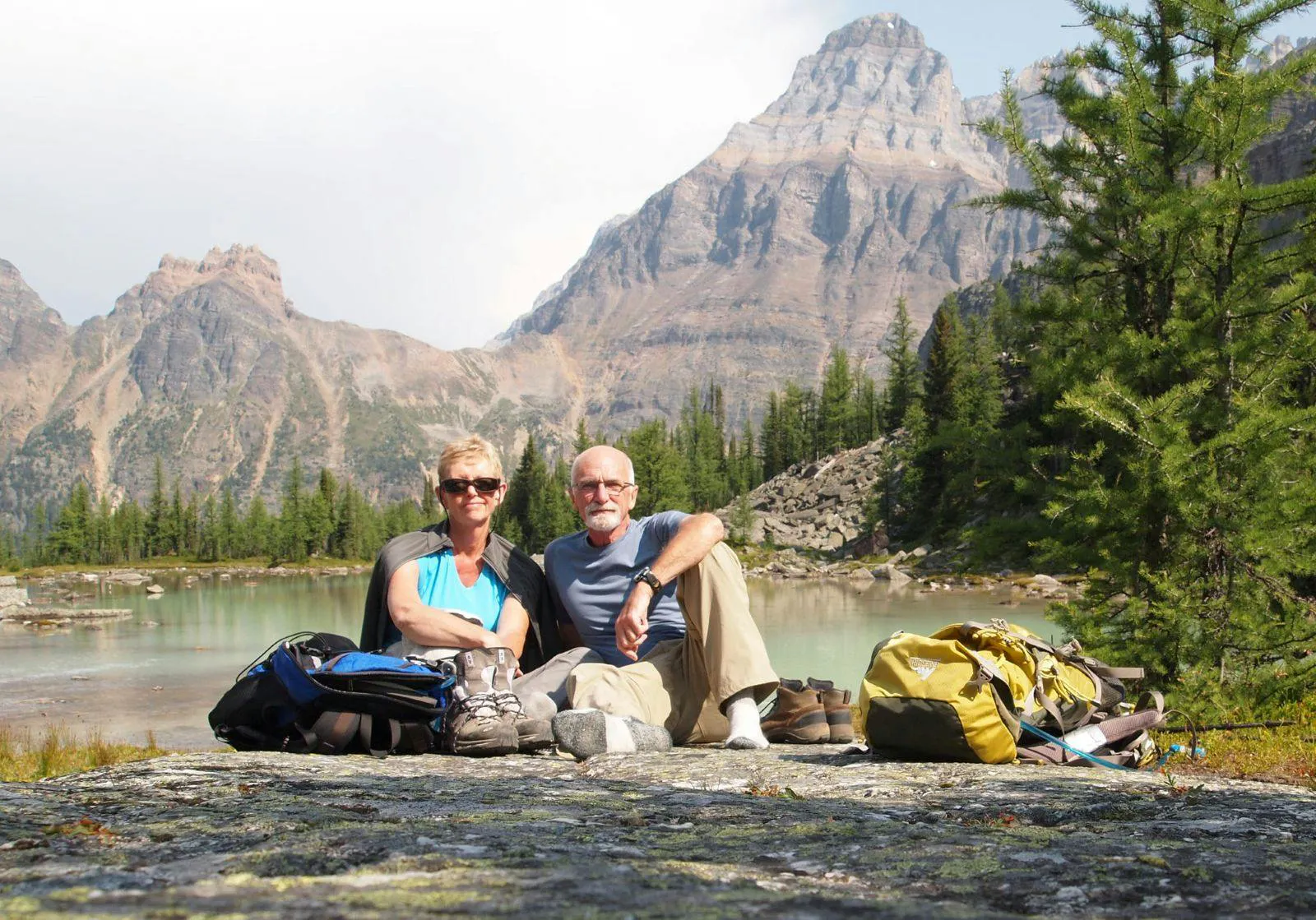
In 1980, Morgan and his wife arrived in Canada—“part adventure,” he says—intending to stay a couple of years. They never left. After a stint with Montreal Engineering, where he worked on control system design and commissioning, Morgan joined Syncrude Canada in 1984. He’s been a fixture of the Canadian process automation landscape ever since.
At Syncrude, Morgan was recruited to lead what was, at the time, a bold and technically risky undertaking to replace analog control systems across the entire utility plant following a costly plantwide shutdown. “It was a courageous thing to do,” he says of the decision to migrate to a distributed digital control system. “Not many utilities had done that.”
His responsibility encompassed regulatory controls for three gas-fired boilers, two cokers, three steam turbines, two gas turbines and a steam letdown system. It was, he says, “white knuckle some of the time.”
Get your subscription to Control's tri-weekly newsletter.
Morgan retired from Syncrude in 2005 and moved to Edmonton, where he hung out his shingle as an independent consultant under the banner of Control Systems Design Services. For the next 15 years, his projects ranged from pump control on the Keystone Pipeline to modernization work at the University of Alberta to burner management system replacements and digital control system upgrades. Only in retirement did he finally get sent somewhere other than the U. S., including a project that took him to Florence, Italy.
Writing, standards and ISA
Alongside his engineering practice, Morgan developed a parallel reputation as a writer and technical contributor. During his Syncrude years, he published articles on Markov modeling, reliability assessment, and—in a nod to the fashions of the era—fuzzy logic, including what may be the first fuzzy PID algorithm ever implemented at Syncrude. His approach to technical writing has always been deliberate.
“I always meant them to be instructive,” he says, noting that too many technical papers neglect to give readers something they can use.
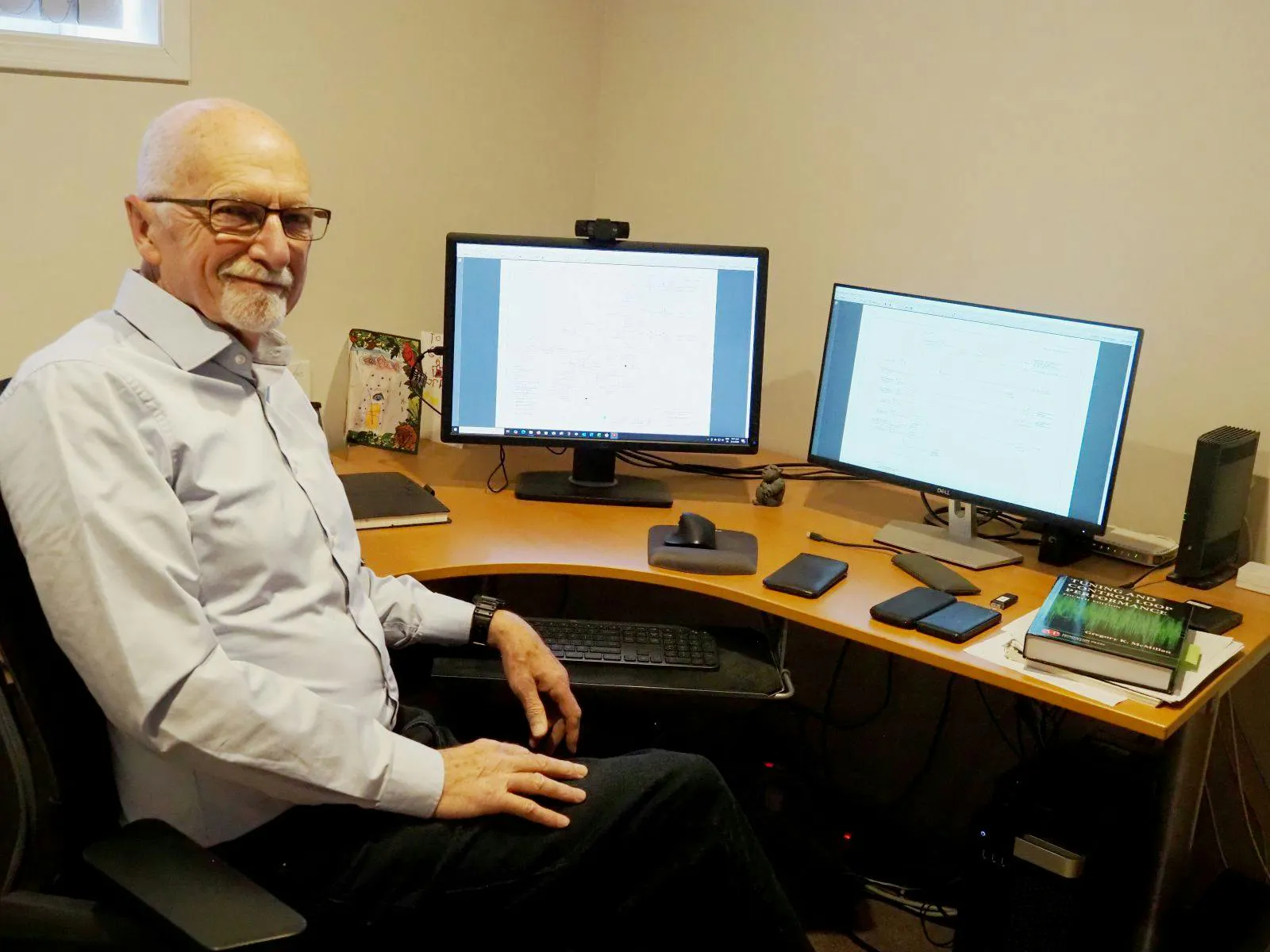
In 2019, at the invitation of frequent Control contributor and fellow Hall of Famer Greg McMillan, Morgan joined the working group developing ISA-5.9, a technical report on the PID algorithm. He was tapped to lead the chapter on PID algorithms, a project that took two years, but was published in 2023 in what is reportedly record time for that kind of standards work.
“It was a great demonstration of how professionals with sometimes different opinions and certainly different experiences could come together and produce something like that,” he says.
What really matters
When asked by Control how the field has changed, Morgan points to different platforms. He says digital systems have brought enormous flexibility and the ability to configure “basically anything you can imagine.” But the fundamentals haven’t changed.
“The processes haven’t changed that much. The dynamics, the physics—it’s the same. The implementation has changed, but the thought processes are the same,” he says.
His greater concern for the field’s future isn’t technological at all. It’s human. “The greater concern is attracting people with inquisitive minds to the field and retaining them in technical positions,” he says. Too often, he argues, technical roles are treated as stepping stones to management, rather than as destinations in their own right—and companies that fail to build technical career ladders risk losing their best engineers at an alarming rate.
Outside of work, Morgan’s pursuits reflect the same blend of precision and adventure that defined his career. He and his climbing partner made a point of tackling only peaks in the Canadian Rockies that had appeared in calendars—“so I could boast about it,” he admits. He still cross-country skis, does woodworking, travels with his wife, and spends time with grandchildren. And he is, as he made clear, still writing.
See the other 2026 Process Automation Hall of Fame inductees here:
About the Author
 Len Vermillion
 Leaders Logo
Leaders relevant to this article: