Engineering a better control process for drug discovery
Produced with support from Yokogawa
This show takeover was sponsored by our YNOW2026 coverage partner, Yokogawa. See more coverage on our YNOW2026 page.
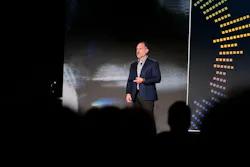
When Jonny Sexton took the stage to open the second day of YNOW2026, Yokogawa's User Conference & Exhibition, he didn't open with a slide of molecules or a genomics breakthrough. He opened with tragic news.
In 1993, at the National Institutes of Health in Bethesda, Md., a Phase 1 clinical trial for an investigational nucleoside analog called fialuridine, which is designed to treat chronic hepatitis B, went catastrophically wrong. Patients in the test had been using it for 13 weeks when severe liver toxicity emerged. Five people died. Two more survived only because they received emergency liver transplants. The drug had been tested extensively in mice, rats, dogs and non-human primates beforehand, and none of those species predicted the danger it posed to humans.
For Sexton, Co-founder and CEO of Torch Bio Inc., and a professor at the University of Michigan's Department of Internal Medicine, that tragedy is the starting point for a much bigger argument: drug development doesn't have a biology problem so much as it has a measurement and process control problem. Fixing it will require the same engineering discipline that industrial companies already apply to manufacturing.
Getting beyond 10-percent yield
Sexton reframed drug discovery as an industrial process. The inputs are the thousands to millions of compounds screened to find a viable candidate. The cycle time from screening to an approved drug conventionally runs 10 to 15 years, at a cost of $1.3 billion to $2.8 billion per approved therapy. The yield—the percentage of drugs that make it from a first human dose to FDA approval—is roughly 10 percent, because success rates are about 66 percent, 58 percent and 59 percent compounding across Phases 1 through 3.
"I don't care what your job is," Sexton told attendees, "if you fail nine times out of 10, you need to rethink the way you're doing it." He noted that failures cluster in the most expensive, latest stages of trials, where patient populations, and financial losses, are largest.
The two leading causes of failure, he explained, are drugs that simply don't work and drugs that prove toxic, most often through drug-induced liver injury. Because everything ingested passes through the gut and into the liver for detoxification, the organ bears disproportionate exposure to any new compound. Both failure modes, Sexton argued, trace back to the same root cause: existing preclinical models simply aren't predictive. Comparisons between animal-model liver injury and what happens in humans, he said, are only around 55 percent, barely better than a coin flip. Failure isn't discovered until drugs reach human beings, at the most expensive and most consequential point in the pipeline.
Engineering a more reliable process
The 2022 FDA Modernization Act 2.0 eliminated the requirement that new drugs be tested in animals, and in 2025 the FDA published a roadmap for phasing out animal testing in favor of what it calls “new alternative methods” (NAMs). These are human-like systems built from engineered tissue and platforms known as organs-on-chips.
Sexton's lab has spent roughly five years building such a future. Researchers enroll patients who have experienced drug-induced liver injury, draw a blood sample, and reprogram specific cells into induced pluripotent stem cells—a technology pioneered in Japan that can become nearly any cell type in the body. Those stem cells are engineered into miniature liver tissue that behaves far more like a real human liver than a cancer cell line.
Imaging is central to making the biology measurable. Using Yokogawa's CV8000 and CQ1 automated-imaging systems, Sexton's team captures high-content images of the engineered tissue and applies machine vision to identify hepatocytes, stellate cells and apoptotic bodies, which are objective markers of liver health, fibrosis and injury. Tested against a positive control (acetaminophen), the platform generated an 83.6 percent drug-induced liver-injury risk score. Applied across a validation set of 74 known-safe and known-unsafe drugs, spanning roughly 20 million cell observations all captured on Yokogawa imaging systems, the resulting machine-learning model achieved 87 percent balanced accuracy—a dramatic improvement over existing preclinical models.
The lab has since moved to microfluidic "liver-on-chip" systems that add continuous drug flow, better mimicking how a real patient experiences a dose rather than a static well. Sexton pointed to Pfizer's discontinued oral GLP-1 candidate danuglipron, which caused liver injury in 6 percent of patients compared with Eli Lilly's orforglipron, an oral small-molecule GLP-1 that the FDA approved in April 2026 with no liver toxicity signals to date. Sexton's platform, he noted, would have flagged that risk differential before either drug reached a human being.
Biology isn’t the bottleneck anymore
The deepest challenge, Sexton argued, is that producing engineered tissue at scale is still a highly manual process. Experienced technicians visually judge which stem-cell colonies or organoids are healthy and which should be discarded so the process is prone to operator variability, undefined raw materials and calendar-driven (rather than condition-driven) scheduling.
"This is great for laboratory research," Sexton said, "but if it's going to be used to approve drugs, we need to have it under robust process control."
His answer is what he called an autonomous-organoid factory: robotics, in-process sensing, AI-enabled state estimation and an agentic AI controller layer that continuously adjusts process variables to counteract input variability. In one deployment, daily automated imaging on a Yokogawa system detects stem-cell colonies undergoing unwanted spontaneous differentiation, and machine vision translates their location into robotic coordinates so a robot can remove them. It’s a task that previously required a technician in the lab every day, without exception, for five years.
In another, a small robot-equipped AI computer images a plate of organoids, identifies healthy ones by size and appearance, transfers them into a 384-well plate, and visually verifies its own work. Sexton noted, with a laugh, that his 16-year-old son helped pilot an early version of the system in his home before it was deployed in the lab.
The partnership model, Sexton said, is straightforward. His lab supplies the biology, the engineered tissue and the AI models. Yokogawa supplies the measurement technology and control stack needed to turn a research process into one regulators can trust.
"We need to flip the script," he said, "from nine out of 10 failures to nine out of 10 successes. That's what's going to bring down drug costs for all of us."
Industrial AI trust gap
Following Sexton, Chris McNamara, Market Content Leader for the Automation Group at EndeavorB2B, presented findings from a recent survey of 120 industrial professionals—engineers, plant managers and executives across sectors including aerospace, data centers and construction—on how organizations are adopting AI and how much trust they place in it.
The headline finding echoed Sexton's own thesis: trust in AI builds through proof, not promises. About half of respondents described their organization's AI commitment as "testing the waters," while roughly a third said AI had already demonstrated measurable value.
Those success stories, McNamara noted, tend to accelerate adoption among more cautious peers. Nearly half of skeptical respondents cited a lack of trust in their own underlying industrial data as the real barrier, not distrust of AI itself. That's a direct parallel to Sexton's argument that reliable outcomes require reliable, well-instrumented processes before autonomy can be layered on top.
On the question of letting AI make real-time decisions in safety-critical processes without human intervention, only 2 percent said they'd never trust it, but a plurality said they'd trust AI with no decision-making authority at all in those settings.
The overwhelming majority of respondents said humans should retain final decision-making authority even when AI is highly reliable, and the reason wasn't performance. Only 24 percent believed machines should have the final say, typically citing AI's freedom from fatigue, bias and emotion. When something goes wrong, most respondents said blame should be shared across engineering, operations and management teams; just 1 percent would fault the AI technology provider itself.
That idea that humans, not algorithms, remain accountable mirrors the closed-loop, human-validated process control Sexton described for his own autonomous lab systems, where AI handles execution, but qualified reference batches and defined critical quality attributes ensure a person can still vouch for the outcome.
On workforce impact, nearly half of the AI-survey respondents believe middle management is most exposed to AI-driven change, while only about 3 percent report actual layoffs so far. Most organizations say they're retraining workers rather than replacing them.
As McNamara summarized, industry wants AI's speed and accuracy, but it's still taking its time to hand over authority.
About the Author
 Len Vermillion