The footprint at Tianxin Pharmaceutical’s Leping factory is striking, not what you’ll see, but what you won’t. What was once 70 cabinets of I/O hardware now holds five, and cabinet space has fallen from about 200 square meters to 15. The site with less is a welcome sight indeed.
The real lesson is how Tianxin got there, and why the same path is open to nearly any processing plant trying to streamline field devices, operations and networks.
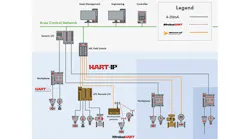
Most plants know the tension. Field networks grow into a patchwork of analog loops, marshalling cabinets and separate power supplies, each added for good reason, each costly to maintain and expand. Tianxin’s answer was Ethernet-APL, which carries power and high-speed communication over two wires, paired with HART-IP so its people could keep the HART knowledge they already had.
Its efforts gained recognition as this year’s FCG Group Plant of the Year, and its story is featured here.
The APL and HART pairing is what made the move bold without being reckless. Operators kept familiar handhelds, device descriptions and workflows. Suppliers reused HART designs and tools. Control and device-management platforms are adapted largely through software, not wholesale replacement. Tianxin didn’t ask its people to abandon what they knew; it gave that knowledge a faster road.
Get your subscription to Control's tri-weekly newsletter.
The results are hard to ignore. Nearly 400 km of cable was eliminated, cable-tray space is down 80%, commissioning is three to five months faster, and process changes are made in one or two days. All of it spans roughly 12,000 HART-IP devices from multiple suppliers, so the network is standardized without locking the plant into one vendor.
So, what does it take? Four things stand out: a clear driver, a willingness to start small, strong partners, and the patience to build confidence at each step before scaling.
Nothing on that list requires the scale of a global vitamin leader. That early pilot showed Ethernet-APL could cut long cable runs and deliver far more field information than a single analog signal. Any plant can name a pain point, pilot a few devices, measure what changes and build from there.
Whether you face a brownfield upgrade or a new build, the question isn’t whether you can afford to modernize your field network. It’s which small step you take first.